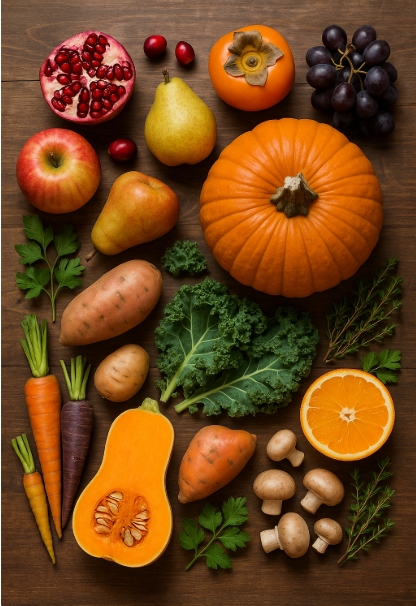
When you pick produce that’s truly in season, you’re not only getting better flavor and value, but you’re often getting higher nutrient density. It is produce that’s been allowed to ripen properly and consumed soon after harvest and tends to retain more vitamins, minerals, antioxidants and phytonutrients. Plus, seasonal eating aligns with local supply and sustainability, which means fresher food and fewer long transport/storage impacts. November has yet another great harvest of produce!

Misfits Market. Grocery delivery service that sells organic produce along with pantry, refrigerated, and frozen items.
In November, as the days grow shorter and temperatures drop, our produce shifts: we move out of peak summer crops and into late-fall and early-winter harvests. These ingredients are rich, hearty, and suited to the transition into cooler weather — they support immunity, circulation, skin health, digestion, and give plenty of variety.
Below is a breakdown of what is in season in many U.S. temperate regions in November, grouped into fruits, vegetables, and herbs — with explanations of their health benefits — followed by three easy, flavour-rich recipes using this produce.

SIFENE 400W Centrifugal Juicer Machine, 3″ Wide Chute, Adjustable Speeds, Easy Clean, Silver
Seasonal Fruits
Here are some of the standout fruits for November and why they matter:
- Apples: Late-season apples are still available and excellent in November. They are a good source of fibre (especially if you keep the skin), vitamin C, and beneficial phytonutrients. CSPI+2Ask the Food Geek+2
- Pears: Pears (such as Bosc, D’Anjou) are still in season and hold up well for baking or roasting. They bring fibre, flavonoids, vitamin C and support digestive health thanks to their natural sugars and particulary fibre. Ask the Food Geek+1
- Cranberries: Fresh cranberries come into season and bring vibrant tartness plus antioxidants (especially anthocyanins), fibre and vitamin C. These can help combat oxidative stress and support urinary tract health and general immune resilience. Simply Recipes+1
- Citrus & winter-tropical fruits: In November you’ll begin to see citrus varieties ramp up: mandarins, oranges, grapefruit, limes, lemons. These fruits are high in vitamin C, flavonoids, and supportive of immune health (very useful as we move into cooler months). Culinary Hill+1
- Persimmons / Pomegranates / Figs / Grapes: These offer a rich mix of phytochemicals, natural sugars, fibre, and interesting flavours. For example, pomegranates deliver polyphenols, persimmons bring vitamin A precursors and fibre, grapes offer resveratrol (especially red varieties). Maglio Companies+1
Health Benefits Summary: These fruits help support immune function (vitamin C), contribute to antioxidant defence (polyphenols/anthocyanins), support digestive health (fibre), and provide naturally sweet flavour without processed sugars — helping your snacks and desserts stay more nutrient-dense.

America’s Test Kitchen The Complete Plant Based Cookbook
Seasonal Vegetables
As we head into November, many of the “cool-weather” or storage crops come into their own. Here are key ones and their benefits:
- Winter squash & pumpkins: Varieties like butternut, acorn, spaghetti squash, pumpkin are abundant. They are rich in beta-carotene (vitamin A precursor), fibre, vitamin C and potassium. Warm, soothing and filling. Simply Recipes+1
- Root vegetables & tubers: Think sweet potatoes, parsnips, turnips, beets, rutabagas. These deliver fibre, vitamins (especially A & C in sweet potatoes), minerals like potassium and magnesium, and slow-digesting carbohydrates that help steady energy in cooler weather. Maglio Companies+1
- Brassicas / hearty greens: Vegetables such as Brussels sprouts, kale, cabbage, broccoli, cauliflower thrive and often develop more sweetness after a light frost. These are rich in vitamin K, vitamin C, folate, fibre, and glucosinolates (which may support detoxification pathways). Culinary Hill+1
- Mushrooms, celery root (celeriac), bok choy, other cool-weather greens: While not always the first to spring to mind, mushrooms in particular offer minerals (selenium, copper), some vitamin D (especially exposed mushrooms), and an umami flavour; root veggies like celeriac bring subtle flavour and fibre. usesilo.com+1
Health Benefits Summary: These vegetables support nutrient-rich meals (vitamins A, C, K, folate, potassium), are often rich in fibre (supporting gut health/regularity), and are plentiful in meals that warm you up, support circulation and overall resilience in colder months.

Kamenstein 20 Jar, Revolving, on Counter Top Twist Spice Rack with 20 Jars Filled with Spice
Seasonal Herbs
Herbs help boost flavour and nutrition — without adding calories or unhealthy fats. In November, consider:
- Parsley: High in vitamin K (important for bone and cardiovascular health), vitamin C, and iron. Adds bright flavour to heavier seasonal dishes.
- Cilantro (coriander leaves): Adds phytonutrients, vitamin K, small amounts of iron and vitamin C; also helps freshen flavor profiles of richer meals.
- Mint: Helpful for digestion, freshening breath, and adds aromatic flavour; mint leaves contain phenolic compounds with anti-inflammatory qualities.
- Thyme / rosemary / sage: While not unique to November, these “winter-herbs” pair well with seasonal roots and squash, and they bring savoury antioxidants (rosemary especially has carnosic acid, etc) and flavour depth.
Health Benefits Summary: Herbs amplify flavour (so you might use less salt or fat), contribute vitamins and phytonutrients (though in smaller amounts than major produce), and help enhance digestion, aroma, and satisfaction — supporting healthier eating patterns.
Three Recipes Using November Produce

Recipe 1: Roasted Winter Squash & Root Vegetable Bowl with Sage-Garlic
Ingredients:
- 1 medium butternut or acorn squash – peeled/cubed
- 2 sweet potatoes – cubed
- 1 parsnip – peeled and sliced
- 1 small red onion – sliced
- 2 tablespoons olive oil
- 2–3 garlic cloves – minced
- 2 teaspoons chopped fresh sage (or 1 tsp dried)
- Salt & pepper to taste
- Optional: handful of chopped parsley (fresh) for garnish
Directions:
- Preheat oven to about 425 °F (220 °C).
- Toss the squash, sweet potatoes, parsnip, and onion with olive oil, garlic, sage, salt & pepper.
- Spread in one layer on a baking sheet and roast ~25-30 minutes or until tender and lightly browned, tossing once halfway through.
- Remove from oven, sprinkle fresh parsley, serve warm.
Why it works: This dish highlights winter squash (vitamin A precursor, fibre), root vegetables (steady-energy carbs, fibre, potassium), garlic & sage (antioxidant and anti-inflammatory support), and fresh parsley adds a nutrient boost. Comforting and nutrient-dense for November.

Hashtag Home Erickson Bamboo Salad Bowl
Recipe 2: Citrus, Pear & Kale Salad with Pomegranate & Mint
Ingredients:
- 1-2 firm pears (e.g., D’Anjou or Bosc) – thinly sliced
- 2 oranges or mandarins – peeled and segmented
- 4 cups chopped kale (remove stems)
- ½ cup pomegranate arils
- ¼ cup fresh mint leaves, roughly chopped
- 2 Tbsp extra-virgin olive oil
- 1 Tbsp fresh lemon juice (or lime)
- 1 Tbsp honey or maple syrup (optional)
- Salt & pepper
Directions:
- In a large bowl, massage the chopped kale with a bit of olive oil and a pinch of salt for 1-2 minutes so it becomes tender.
- Add pear slices, orange segments, pomegranate arils, chopped mint.
- In small bowl whisk remaining olive oil, lemon juice, honey/maple syrup, salt & pepper.
- Drizzle dressing over salad, toss lightly and serve.
Why it works: This salad uses pears (fibre, natural sweetness), citrus (vitamin C, flavonoids), pomegranate (antioxidants), kale (vitamin K, C, folate), and mint (fresh phytonutrients). It’s bright, refreshing, and suits the November transition — balancing heavier winter fare.

Recipe 3: Tomato-Cherry & Herb Salsa with Fresh Mint & Cilantro
Ingredients:
- 2-3 ripe medium tomatoes – diced
- ½ cup fresh cherries (pitted), chopped
- 1 small cucumber (optional) – diced
- 2 Tbsp chopped fresh mint
- 2 Tbsp chopped fresh cilantro
- 1 small red onion – finely diced
- Juice of 1 lime
- 1 Tbsp extra-virgin olive oil
- Salt & pepper to taste
Directions:
- In a mixing bowl combine diced tomatoes, chopped cherries, cucumber (if using), red onion, chopped mint and cilantro.
- Drizzle in lime juice and olive oil, stir gently to combine.
- Season with salt and pepper. Let sit 10-15 minutes to allow flavours to meld. Serve with whole-grain chips, grilled fish or chicken, or as a topping for tacos or salads.
Why it works: Tomatoes bring vitamin C, vitamin K, potassium and lycopene; cherries add fibre and antioxidants; fresh mint and cilantro add phytonutrient diversity; olive oil helps absorb fat-soluble vitamins. It’s light, flavourful, and a fresh twist using in-season produce.
Final Thoughts
In November, your plate can reflect a rich transition: moving from bright summer produce into deeper, earthier, more comforting flavours — while still keeping nutrient-density front of mind. By including fruits like apples, pears, cranberries, citrus, pomegranates; vegetables like squash, root veggies, brassicas, mushrooms; and herbs like mint, parsley, cilantro, sage — you’re crafting varied meals that support immune resilience, digestion, skin health, circulation, and overall vitality.
Hope you enjoyed this blog! I am an affiliate marketer who uses affiliate links. Any support you give is appreciated! Have a wonderful day and cheers to your better health!




Leave a Reply