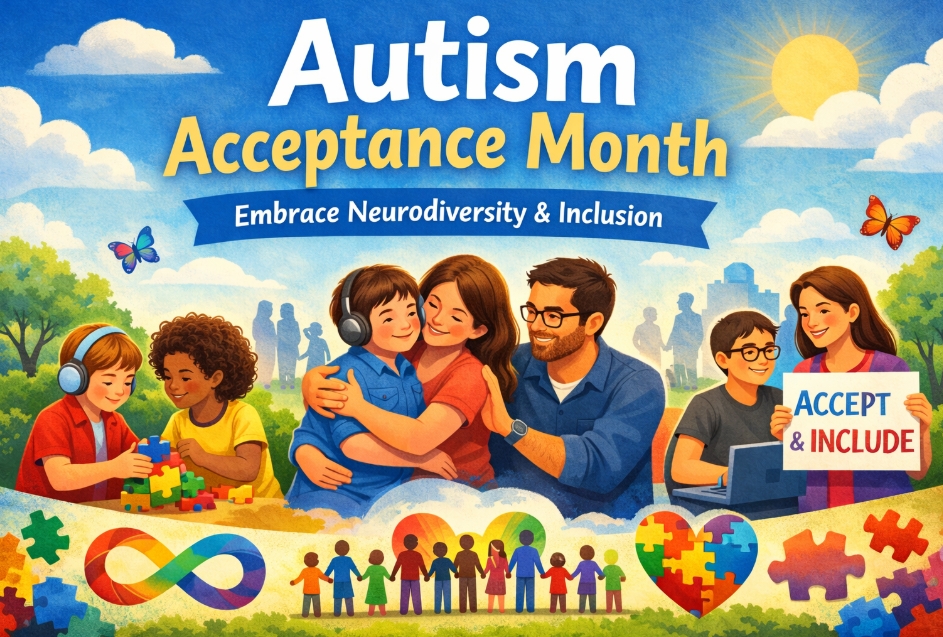
April marks Autism Acceptance Month, a time dedicated not just to raising awareness, but to fostering true understanding, inclusion, and respect for individuals on the autism spectrum. Over the years, the conversation has evolved—from simply recognizing autism to actively embracing neurodiversity and advocating for meaningful support systems.
For readers of To Your Better Health, this topic aligns deeply with holistic wellness. Mental, emotional, and neurological health are just as important as physical health, and Autism Acceptance Month reminds us that wellness looks different for everyone.
What Is Autism?
Autism, or Autism Spectrum Disorder (ASD), is a developmental condition that affects how individuals communicate, interact socially, and process information. It is called a “spectrum” because it presents differently in every individual.
Some common characteristics include:
- Differences in communication (verbal or nonverbal)
- Unique social interaction styles
- Repetitive behaviors or routines
- Heightened or reduced sensory sensitivity
It’s important to understand that autism is not a disease to be cured, but a neurological difference to be supported and respected.

Joyreal AAC Device for Autism, Non-Verbal Communication Tools for Speech Therapy & Stroke Rehab.
Awareness vs. Acceptance: Why the Language Matters
For many years, April was widely known as “Autism Awareness Month.” While awareness is important, it often stops at basic knowledge. Acceptance goes further.
Acceptance means:
- Valuing autistic individuals as they are
- Creating inclusive environments
- Listening to autistic voices and experiences
- Removing stigma and misconceptions
The shift toward acceptance reflects a broader understanding that diversity in how we think, learn, and experience the world is something to celebrate—not fix.
The Importance of Neurodiversity
Neurodiversity is the idea that neurological differences—like autism, ADHD, and dyslexia—are natural variations of the human brain.
Rather than viewing autism through a deficit-based lens, neurodiversity emphasizes strengths such as:
- Deep focus and attention to detail
- Strong pattern recognition
- Creativity and unique problem-solving
- Honesty and authenticity
When society embraces neurodiversity, we open the door to innovation, compassion, and a more inclusive world.

Common Myths About Autism
Despite growing awareness, misconceptions still exist. Let’s address a few:
Myth 1: All autistic people are the same
Reality: Autism is a spectrum, and every individual has different abilities, challenges, and personalities.
Myth 2: Autistic individuals lack empathy
Reality: Many autistic people experience deep empathy but may express it differently.
Myth 3: Autism only affects children
Reality: Autism is lifelong. Many adults are autistic, including those who may be undiagnosed.
Myth 4: Autism is caused by poor parenting or vaccines
Reality: These claims have been scientifically debunked.
Supporting Individuals on the Spectrum
True acceptance involves actionable support. Whether you’re a parent, educator, employer, or community member, here are meaningful ways to help:
🧩 1. Practice Patience and Understanding
Communication styles may differ. Give individuals time and space to express themselves.
🧩 2. Create Sensory-Friendly Environments
Many autistic individuals are sensitive to noise, lights, or textures. Small changes—like dim lighting or quiet spaces—can make a big difference.
🧩 3. Encourage Inclusive Communication
Use clear, direct language. Visual supports or written instructions can be helpful.
🧩 4. Support Routine and Structure
Predictability can reduce anxiety and improve comfort.
🧩 5. Advocate for Inclusion
In schools, workplaces, and communities, inclusion should be intentional—not an afterthought.

Magicteam Sound White Noise Machine with 20 Non Looping Natural Soothing Sounds and Memory Function 32 Levels of Volume Powered by AC or USB and Sleep Sound Timer Therapy for Baby Kids Adults.
Autism and Holistic Health
From a wellness perspective, supporting individuals with autism often involves a whole-body approach. While autism itself is not something to “treat,” many individuals benefit from supportive lifestyle practices.
🥗 Nutrition and Gut Health
Some research suggests a connection between gut health and neurological function. While every individual is different, balanced nutrition can support overall well-being.
Helpful dietary considerations may include:
- Whole, unprocessed foods
- Omega-3 fatty acids (found in fish, flaxseeds, walnuts)
- Fruits and vegetables rich in antioxidants
- Limiting artificial additives when possible
😴 Sleep Support
Sleep challenges are common in individuals with autism. Consistent bedtime routines and calming environments can help improve sleep quality.
🧘 Stress and Sensory Regulation
Mindfulness practices, movement (like yoga or walking), and sensory tools (weighted blankets, fidget items) can help regulate stress.

The Role of Families and Caregivers
Families play a crucial role in supporting autistic individuals, but it’s important to recognize that caregivers also need support.
Helpful strategies include:
- Building a strong support network
- Seeking professional guidance when needed
- Prioritizing self-care to prevent burnout
- Celebrating small wins and progress
Remember, every journey is unique—there is no one-size-fits-all approach.
Inclusion in Schools and Workplaces
Creating inclusive environments benefits everyone, not just those on the spectrum.
In Schools:
- Individualized education plans (IEPs)
- Sensory-friendly classrooms
- Teacher training on neurodiversity
In Workplaces:
- Flexible work environments
- Clear communication and expectations
- Recognition of unique strengths
Many companies are beginning to recognize the value autistic individuals bring—especially in areas like technology, data analysis, and creative problem-solving.
How You Can Participate in Autism Acceptance Month
You don’t have to be an expert to make a difference. Small actions can have a meaningful impact.
Here are a few ways to get involved:
- Educate yourself and others
- Support autistic creators and businesses
- Donate to organizations that promote acceptance and support
- Attend local community events
- Practice inclusive language and behavior
Even something as simple as listening and learning from autistic voices can create real change.
A More Inclusive Future
Autism Acceptance Month is more than a calendar observance—it’s a reminder to build a world where differences are embraced, not excluded.
When we move beyond awareness and into acceptance, we:
- Reduce stigma
- Empower individuals
- Strengthen communities
- Promote true health and well-being
At its core, acceptance is about respect, empathy, and understanding. It’s about recognizing that every brain is unique—and that diversity is what makes us stronger.
Final Thoughts
Health is not just about diet, exercise, or supplements—it’s about how we treat one another and the environments we create. Autism Acceptance Month challenges us to expand our definition of wellness to include inclusion, compassion, and respect for all minds.
By embracing neurodiversity, we take a step toward a healthier, more connected world—one where everyone has the opportunity to thrive.
I am an affiliate marketer and I use affiliate links. Some of the links are from Amazon.
I hope you enjoyed learning and connecting with the autistic world today. Feel free to comment! If you have an autistic loved one in your life, you can share ways you like to connect or include autistic people in your life. Have a wonderful day and cheers to your better health!






Leave a Reply