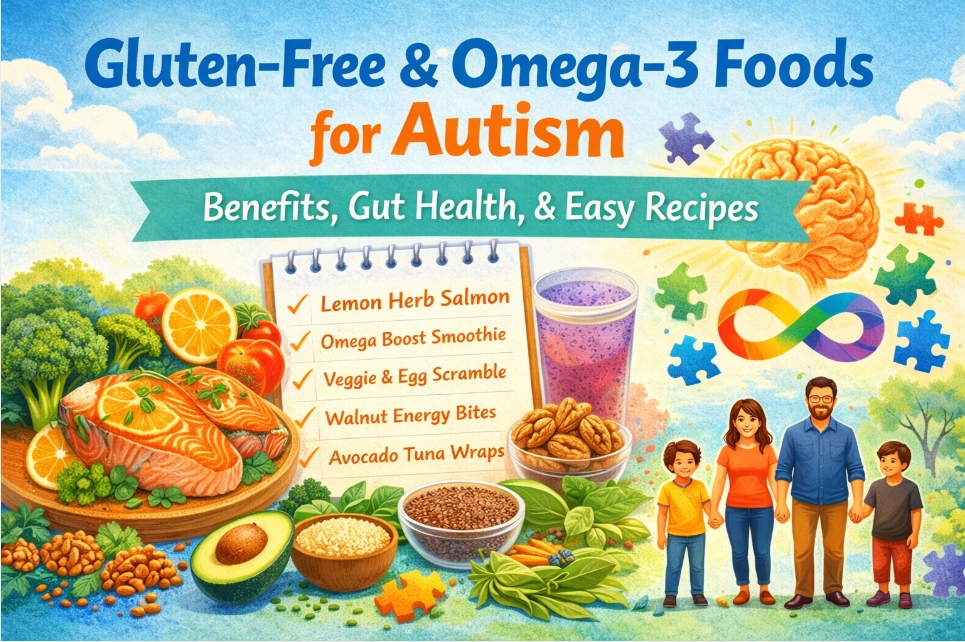
When it comes to supporting individuals with autism, nutrition is not about “fixing” autism—it’s about supporting overall well-being, gut health, and brain function. Many families and individuals explore dietary approaches that may help manage certain symptoms, particularly those related to digestion, inflammation, and focus.
Two commonly discussed nutritional strategies include gluten-free eating and incorporating omega-3 fatty acids. While every individual is different and no single diet works for everyone, these approaches have shown potential benefits for some people on the autism spectrum.
In this follow-up to Autism Acceptance Month, let’s explore how these foods may help—and how to easily incorporate them into delicious, healthy meals. If you would like to learn more about Autism acceptance month, you can visit the link below:

Gluten free ramen noodles (10 packs) gf gluten free noodles. Vegan healthy brown rice noodle. Low sodium ramen plain noodle no seasoning.
Understanding the Gut-Brain Connection
The gut and brain are closely connected, often referred to as the “gut-brain axis.” Many individuals with autism experience gastrointestinal issues such as bloating, constipation, or food sensitivities.
Supporting gut health may help:
- Improve digestion
- Reduce inflammation
- Support mood and behavior
- Enhance overall comfort and well-being
This is where gluten-free diets and omega-3-rich foods can play a role.

Why Gluten-Free Foods May Help
Gluten is a protein found in wheat, barley, and rye. Some individuals with autism may have gluten sensitivity, even if they don’t have celiac disease.
Potential Benefits of a Gluten-Free Diet:
- Reduced digestive discomfort
- Improved focus and behavior (in some individuals)
- Lower inflammation in the body
- Better nutrient absorption
By removing gluten, the digestive system may function more efficiently for those who are sensitive.
Naturally Gluten-Free Foods Include:
- Fruits and vegetables
- Lean proteins (chicken, fish, eggs)
- Rice, quinoa, and oats (certified gluten-free)
- Nuts and seeds

Sports Research® Vegan DHA 700mg – Cognitive Support, Brain Support, Supplement with Omega-3 DHA from Algae Oil – Vegan Certified · Non-GMO · Gluten Free – 90 Count Softgels.
The Power of Omega-3 Fatty Acids
Omega-3 fatty acids are essential fats that play a key role in brain development and function.
Benefits of Omega-3s:
- Support cognitive function
- Help regulate mood
- Reduce inflammation
- May improve attention and focus
Omega-3s are especially important because many modern diets are low in these healthy fats.
Top Omega-3 Food Sources:
- Fatty fish (salmon, sardines, mackerel)
- Chia seeds and flaxseeds
- Walnuts
- Hemp seeds
5 Delicious Gluten-Free & Omega-3-Rich Recipes

1. Lemon Herb Salmon with Quinoa
Ingredients:
- 2 salmon fillets
- 1 cup quinoa (rinsed)
- 2 cups water or broth
- 1 lemon (sliced)
- 2 tbsp olive oil
- 2 cloves garlic (minced)
- Fresh parsley
- Salt and pepper
Instructions:
- Preheat oven to 375°F.
- Place salmon on a baking sheet, drizzle with olive oil, garlic, salt, and pepper.
- Top with lemon slices and bake for 12–15 minutes.
- Cook quinoa in water or broth (about 15 minutes).
- Fluff quinoa and serve with salmon and fresh parsley.
🥑 2. Omega Boost Smoothie
Ingredients:
- 1 cup almond milk
- 1/2 cup blueberries
- 1 banana
- 1 tbsp chia seeds
- 1 tbsp ground flaxseed
- 1 tbsp almond butter
Instructions:
- Add all ingredients to a blender.
- Blend until smooth.
- Serve immediately for a nutrient-packed start to your day.

3. Gluten-Free Veggie & Egg Scramble
Ingredients:
- 3 eggs
- 1/2 cup spinach
- 1/4 cup diced tomatoes
- 1/4 cup mushrooms
- 1 tbsp olive oil
- Salt and pepper
Instructions:
- Heat olive oil in a pan over medium heat.
- Sauté vegetables for 3–4 minutes.
- Add beaten eggs and cook while stirring.
- Season and serve warm.
🥜 4. No-Bake Walnut Energy Bites
Ingredients:
- 1 cup walnuts
- 1/2 cup gluten-free oats
- 1/2 cup dates
- 1 tbsp chia seeds
- 1 tbsp cocoa powder
Instructions:
- Blend all ingredients in a food processor.
- Roll into small balls.
- Refrigerate for at least 30 minutes before serving.

5. Avocado Tuna Lettuce Wraps
Ingredients:
- 1 can tuna (wild-caught preferred)
- 1 ripe avocado
- 1 tbsp olive oil or yogurt
- 1 tbsp lemon juice
- Lettuce leaves
- Salt and pepper
Instructions:
- Mix tuna, avocado, olive oil, and lemon juice.
- Season with salt and pepper.
- Spoon mixture into lettuce leaves and serve.
Important Considerations
While these dietary approaches can be helpful for some, it’s important to remember:
- Not every individual with autism benefits from a gluten-free diet
- Changes should be made gradually
- Consulting with a healthcare professional or nutritionist is recommended
Nutrition should always be personalized and balanced, ensuring all essential nutrients are included.

Final Thoughts
Supporting individuals with autism goes beyond awareness—it includes creating environments that nurture both physical and emotional well-being. Nutrition is one piece of that puzzle.
Gluten-free foods may help improve gut health for those with sensitivities, while omega-3 fatty acids provide essential support for brain function and inflammation.
By focusing on whole, nutrient-dense foods, you can create meals that are not only supportive—but also delicious and enjoyable for the entire family.
I am an affiliate marketer and I use affiliate links. Some of the links are for Amazon.
I hope you enjoy this information and recipes! Feel free to leave a comment and even mention a gluten-free recipe you know of to share with others who are looking for more gluten-free recipes! Have a wonderful day, and cheers to your better health!




Leave a Reply