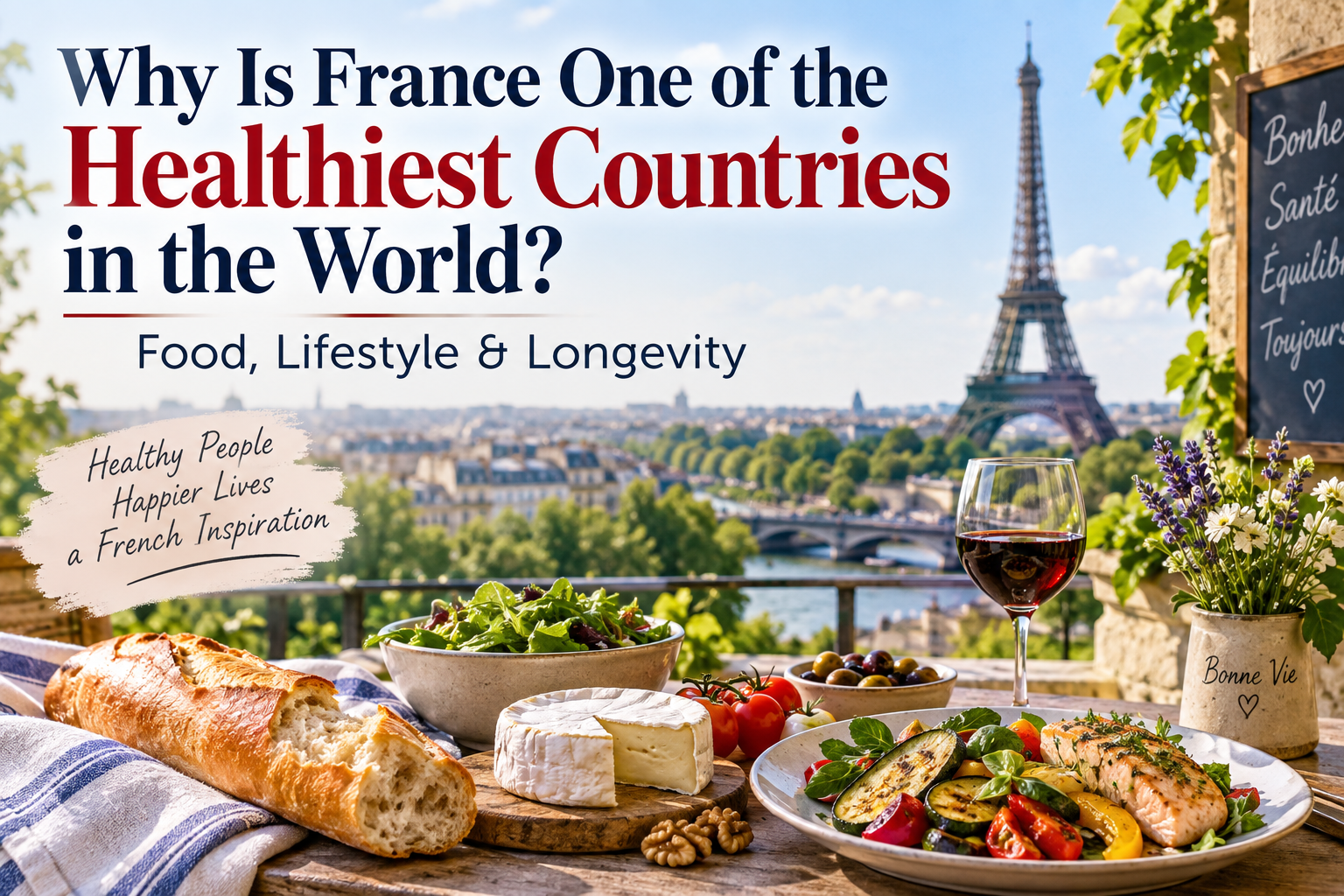
France is known for its beautiful countryside, historic cities, delicious cuisine, and appreciation for good food. But beyond its cultural attractions, France is also recognized for its strong population health outcomes and high life expectancy.
According to the Bloomberg Global Health Index, France ranked as the 12th healthiest nation in the world. Of course years, and different studies vary, but this study was well-researched.
Nevertheless, France provides an interesting example of how food culture, daily routines, healthcare, and social connections can contribute to overall well-being.
In this article, we’ll explore the French lifestyle, traditional foods, and factors that contribute to the country’s favorable health outcomes.

26 oz French Onion Soup Bowls, Ceramic Soup Bowls with Handles
Stackable Soup Crocks Oven Safe for Chili, Beef Stew, Cereal, Casseroles Microwave & Dishwasher Safe, Set of 4, Brown Green.
1. France Has a High Life Expectancy
One of the most common ways to evaluate a country’s health is by examining life expectancy. France has a relatively long life expectancy compared with many other countries.
According to the OECD and European Observatory’s 2025 country health profile, life expectancy in France reached approximately 83.1 years in 2024, compared with an EU average of 81.7 years.
French women generally have a longer life expectancy than men, reflecting patterns also observed in many other countries.
While life expectancy does not tell the entire story of a nation’s health, it provides valuable insight into the effects of healthcare, living conditions, nutrition, and public health.
France’s longevity is influenced by several factors rather than one particular food or lifestyle habit.

2. The French Approach to Food: Quality Over Quantity
French cuisine is often associated with bread, cheese, pastries, butter, and rich sauces. Although some of these foods can be high in calories or saturated fat, traditional French eating patterns also include vegetables, fruits, fish, legumes, and other nutrient-rich ingredients.
One characteristic often associated with French food culture is an appreciation for fresh ingredients, balanced meals, and enjoying food in moderation.
Common foods found in French eating patterns include:
- Fresh vegetables such as tomatoes, carrots, green beans, and leafy greens.
- Fruits, including apples, pears, berries, and seasonal produce.
- Fish and seafood.
- Eggs, poultry, and other protein sources.
- Beans, lentils, and other legumes.
- Bread and grains.
- Yogurt and cheese.
- Olive oil, herbs, and other cooking ingredients.
Of course, not everyone in France follows the same diet. Eating habits vary according to region, age, income, and personal preferences.
However, traditional French cooking often emphasizes preparing meals with a variety of ingredients rather than relying entirely on heavily processed foods.
The Importance of Portion Awareness
Another idea commonly connected with French eating habits is enjoying rich foods in moderate portions.
For example, a meal might include a small serving of cheese, vegetables, bread, and a protein source. A pastry or dessert may be enjoyed as part of an overall eating pattern.
Portion sizes and meal habits differ among individuals, so this should not be considered a universal French rule. Still, paying attention to portions can help people enjoy a variety of foods while managing overall calorie intake.
The goal is not necessarily to eliminate favorite foods but to create a balanced approach to eating.

Vitamatic Moringa Extract – Plant-Based Capsules with Moringa Oleifera Leaf Powder – Green Superfood Supplement – Vegetarian, Non-GMO, Made in the USA – 180 Capsules.
3. Fresh and Seasonal Foods Are Part of French Food Culture
France has a long tradition of farmers’ markets, local food shopping, and seasonal ingredients. Depending on the region and time of year, people may enjoy fresh berries, stone fruits, tomatoes, leafy greens, squash, and root vegetables.
Eating a variety of fruits and vegetables provides important nutrients, including:
- Vitamin C: Supports immune function and collagen production.
- Folate: Helps support cell growth and normal bodily functions.
- Potassium: Important for normal nerve and muscle function.
- Dietary fiber: Supports digestive health and contributes to cardiovascular health.
Seasonal produce can also make meals more enjoyable and encourage variety in the diet.
Traditional French Foods to Explore
Several French dishes can be adapted into nutritious meals.
Ratatouille: A vegetable dish typically made with zucchini, eggplant, tomatoes, onions, and herbs. It provides a flavorful way to incorporate a variety of vegetables.
Lentil Salad: A fiber-rich dish that can include lentils, fresh vegetables, herbs, and a light vinaigrette.
French Vegetable Soup: A comforting meal made with seasonal vegetables. Beans or lean protein can be added to increase its nutritional value.
Roasted Fish with Herbs: A simple meal that combines seafood with herbs, lemon, and vegetables.
These dishes demonstrate how French-inspired meals can include vegetables, fiber, and protein while using simple ingredients.

4. A Lifestyle That Values Enjoyment and Social Meals
Food in France is often connected to social interaction and cultural traditions. Meals may be shared with family, friends, or colleagues, creating opportunities for conversation and connection.
Taking time to enjoy a meal can encourage people to focus on their food and recognize hunger and fullness cues. Eating more mindfully may also help some individuals develop a healthier relationship with food.
However, it’s important to avoid assuming that everyone in France eats slowly or follows the same daily routine. Modern work schedules, individual preferences, and regional differences all influence eating habits.
Social connections are another important part of well-being. Spending time with others can help reduce isolation, provide emotional support, and contribute to a sense of belonging.
These benefits are not exclusive to France, but they highlight how healthy living involves more than nutrition and exercise.
5. Walking and Everyday Physical Activity
Walking is part of everyday life for many people living in French cities and towns. Depending on where they live, residents may walk to stores, public transportation, workplaces, restaurants, or local markets.
Walkable neighborhoods and access to public transportation can make it easier for people to incorporate movement into their daily routines.
Regular physical activity can support:
- Cardiovascular health.
- Muscle strength and endurance.
- Bone health.
- Mental well-being.
- Healthy weight management.
- Reduced risk of certain chronic diseases.
Not everyone in France has the same access to walkable environments, and activity levels vary throughout the population.
Still, the broader lesson is that incorporating movement into everyday life can be beneficial. Short walks, taking the stairs, and spending time outdoors are practical ways to increase physical activity.

Veken 34oz French Press Coffee Maker, No Plastic Touching Cafe,1 L Cafetera
Heat Resistant Thickened Borosilicate Glass Stainless Steel Brewer, Cold Brew Pot for Kitchen, Travel, Camping, Tea, Gifts, Copper.
6. France’s Healthcare System Contributes to Population Health
Healthcare access is an important factor in evaluating the health of a country. France has a universal healthcare system that provides broad coverage for residents, although out-of-pocket expenses and access to certain services can vary.
The healthcare system supports medical consultations, preventive care, treatment, and management of chronic diseases.
According to OECD health indicators, France has demonstrated favorable health outcomes, including a high life expectancy and relatively low avoidable mortality compared with many countries.
Healthcare access can help people identify health concerns, receive treatment, and manage long-term conditions.
However, France’s healthcare system also faces challenges, including regional differences in access, an aging population, and pressure on medical resources.
This highlights an important point: A country’s health rating is influenced by both personal lifestyle choices and broader social systems.
Nutrition and exercise matter, but healthcare, education, living conditions, and public health policies also play significant roles.
7. What Health Challenges Does France Face?
Although France has favorable health indicators, it still experiences challenges that affect population well-being.
Smoking and alcohol consumption remain important public health concerns. Smoking rates have declined over time, but tobacco use continues to contribute to preventable illness.
France also experiences health inequalities. People with different income levels may have unequal access to resources, healthy foods, healthcare, and living conditions.
Other concerns include chronic diseases, an aging population, and differences in health outcomes between regions.
These challenges show that even countries with high life expectancy need ongoing prevention efforts and healthcare improvements.
A high health ranking does not mean that every person experiences the same level of health or has equal access to healthy living resources.

8. Healthy French-Inspired Habits You Can Try
You don’t have to live in France to incorporate some of its food and lifestyle traditions into your daily routine.
Here are several practical habits to consider:
1. Eat More Seasonal Produce
Choose a variety of fruits and vegetables throughout the year. Seasonal ingredients can add flavor, color, and nutrients to your meals.
2. Include Protein With Meals
Try fish, eggs, beans, lentils, poultry, or other protein sources to support muscle health and overall nutrition.
3. Make Meals More Enjoyable
Sit down for meals, reduce distractions when possible, and take time to appreciate your food.
4. Practice Portion Awareness
Enjoy favorite foods in portions that fit your nutritional needs. A balanced diet can include a variety of foods.

Foldable Treadmills for Home with 10% Incline, 400 LBS Capacity
3.5HP Quiet Running Treadmill, 40″ x 16″ Wide Belt, Max 7.6 MPH, Pulse Sensor, Bluetooth Speaker and Smart App, Space-Saving.
5. Walk More Often
Add short walks after meals or throughout the day. Even small amounts of movement can contribute to your daily activity.
6. Prepare More Meals at Home
Cooking at home allows you to choose ingredients, adjust portion sizes, and experiment with healthy recipes.
7. Prioritize Preventive Healthcare
Regular medical visits, recommended screenings, and discussions with healthcare professionals can support long-term health.
These habits are not exclusive to France, but they can help create a balanced and sustainable approach to well-being.
Conclusion: What Can We Learn From France?
France offers valuable insights into the relationship between food, culture, healthcare, and longevity. Its high life expectancy and favorable population health indicators reflect a combination of factors rather than a single diet or lifestyle practice.
Traditional French meals often include fresh produce, varied ingredients, and enjoyable dining experiences. Walking, social connections, and healthcare access may also contribute to well-being, although individual experiences differ.
While the claim that France is the 12th healthiest country in the world depends on the ranking system and year, France’s documented health outcomes make it an interesting country to study.
The biggest lesson is that healthy living does not have to mean giving up enjoyment. A balanced approach to nutrition, regular movement, preventive healthcare, and meaningful social connections can all contribute to a healthier life.
Whether you’re inspired to prepare a French vegetable dish, take a walk after dinner, or spend more time enjoying meals with loved ones, small lifestyle changes can support your health over time.
References
- European Observatory / OECD — Country Health Profile 2025: France
- OECD — Health at a Glance 2025
- World Health Organization — France Health Data
- Bloomberg Global Health Index Overview
- Spain Is Considered Healthiest Country, According to New Report
- Healthiest Countries 2025
I am an affiliate marketer and use affiliate links. Some links are from Amazon.
I hope you found it interesting in learning a little about the healthy lifestyle of France. Feel free to comment, share, like, and subscribe! Subscription is always free! Have a wonderful day and cheers to your better health!





Leave a Reply