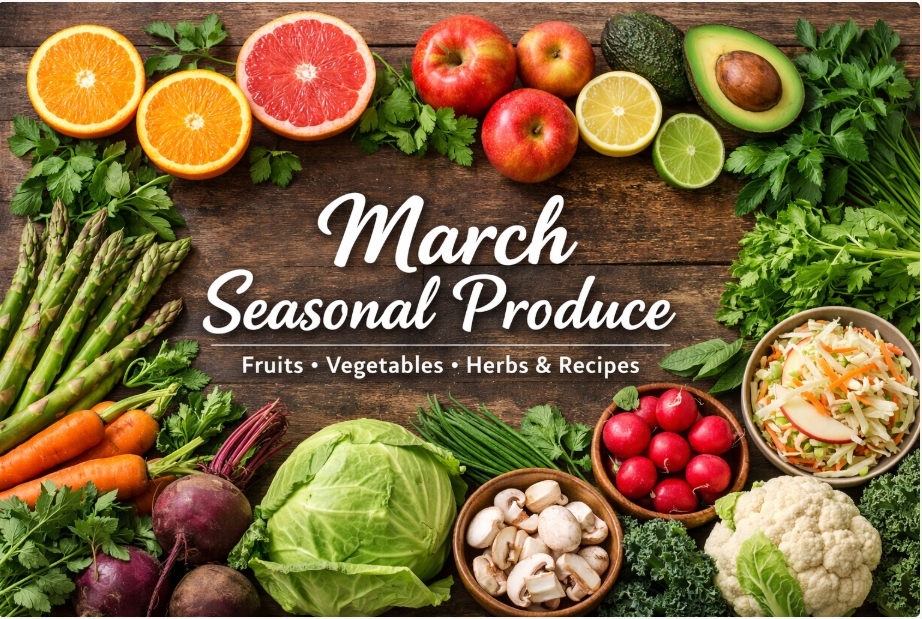
March marks the transition from winter into early spring, and with it comes a refreshing variety of seasonal fruits, vegetables, and herbs. Eating produce that is in season often means better flavor, better texture, and higher nutritional value. Because these foods are harvested at their natural peak, they tend to contain more vitamins, minerals, and antioxidants compared to produce grown out of season.
Seasonal eating also encourages a balanced diet filled with diverse nutrients. Many March vegetables are leafy greens and cruciferous vegetables that support detoxification and immune health, while winter citrus fruits continue to provide a strong source of vitamin C. Together, these foods help the body stay energized and nourished as the seasons begin to change.
Below is a look at the wide range of fruits, vegetables, and herbs that are typically in season during March and the key health benefits they provide.
Fruits in Season in March
Although early spring does not produce as many fruits as the summer months, several nutrient-rich fruits are still in season.
Apples
Apples remain widely available through early spring thanks to cold storage. They are rich in fiber, vitamin C, and antioxidants, which support digestion, heart health, and immune function.
Citrus Fruits (Oranges, Grapefruits, Lemons, Limes, Mandarins)
Citrus fruits are still at their peak in March. They are excellent sources of vitamin C, folate, potassium, and flavonoids, which help boost immunity, protect cells, and support heart health.
Pears
Pears provide dietary fiber, vitamin C, and copper, which support digestive health and help the body produce energy.
Avocados
While technically a fruit, avocados are known for their heart-healthy monounsaturated fats, potassium, vitamin E, and folate, making them beneficial for cardiovascular health and brain function.

Misfits Market. Delivery Service that specializes in produce! There are plenty of organic options and they also save food from waste! Other food categories are available!
Vegetables in Season in March
March offers a wide range of vegetables, especially leafy greens and cruciferous vegetables that thrive in cooler weather.
Asparagus
One of the first vegetables of spring, asparagus is rich in folate, vitamin K, fiber, and antioxidants, supporting digestion and healthy cell function.
Artichokes
Artichokes contain fiber, magnesium, vitamin C, and antioxidants that support liver health and digestion.
Arugula
This peppery leafy green contains vitamins A, C, and K, along with plant compounds that support immune health.
Beets
Beets are rich in folate, potassium, manganese, and nitrates, which may help improve blood flow and heart health.
Broccoli
Broccoli contains vitamins C and K, fiber, and sulforaphane, a plant compound associated with disease prevention.
Brussels Sprouts
These cruciferous vegetables are packed with vitamin C, vitamin K, folate, and antioxidants that support immune and bone health.
Cabbage
Cabbage provides vitamin C, fiber, vitamin K, and powerful plant compounds that may help reduce inflammation.
Carrots
Carrots are rich in beta-carotene (vitamin A), potassium, and antioxidants, supporting eye health and immune function.
Cauliflower
Cauliflower contains vitamin C, fiber, and choline, which support brain and digestive health.
Collard Greens
These leafy greens are rich in vitamins A, C, and K, calcium, and fiber, supporting bone and immune health.
Kale
Often considered a superfood, kale provides vitamins A, C, and K, calcium, and antioxidants that support heart health and reduce inflammation.
Leeks
Leeks offer vitamin K, vitamin B6, manganese, and antioxidants, supporting heart health and digestion.
Mushrooms
Mushrooms contain B vitamins, selenium, and antioxidants, which support immune health and energy metabolism.
Radishes
Radishes are rich in vitamin C and antioxidants and can support digestion.
Spinach
Spinach provides iron, magnesium, vitamin K, vitamin A, and folate, making it excellent for energy and bone health.
Turnips
Turnips contain fiber, vitamin C, and potassium, supporting digestion and immune health.

Mixing Bowls Stainless Steel Set, Germany Multifunctional Shredding Chopping Basin with grater, Colander, Food Strainers.
Herbs in Season in March
Fresh herbs begin appearing more often in early spring and are an easy way to add flavor and nutrients to meals.
Chives
Chives provide vitamin K, vitamin C, and antioxidants and add a mild onion flavor to dishes.
Parsley
Parsley is rich in vitamin K, vitamin C, and vitamin A, and it may support digestion and reduce inflammation.
Mint
Mint contains antioxidants and vitamin A and is commonly used to support digestion.
Cilantro
Cilantro provides vitamins A, C, and K and may help support detoxification.
Dill
Dill contains vitamin C, manganese, and antioxidants that support immune health.
Recipes Using March Produce

Citrus Avocado Spinach Salad
This refreshing salad is packed with vitamin C, healthy fats, and leafy greens.
Ingredients
3 cups fresh spinach
1 avocado, sliced
1 orange, peeled and segmented
¼ cup thinly sliced red onion
¼ cup walnuts or almonds
2 tablespoons olive oil
1 tablespoon lemon juice
Salt and pepper to taste
Instructions
- Place spinach in a large bowl.
- Add avocado slices, orange segments, and red onion.
- Sprinkle walnuts or almonds over the salad.
- In a small bowl, whisk together olive oil, lemon juice, salt, and pepper.
- Drizzle dressing over the salad and toss gently before serving.
Roasted Spring Vegetables with Garlic and Herbs
This dish highlights the natural sweetness of early spring vegetables.
Ingredients
1 bunch asparagus, trimmed
2 carrots, sliced
1 cup cauliflower florets
1 cup broccoli florets
2 tablespoons olive oil
3 cloves garlic, minced
1 tablespoon chopped parsley
1 teaspoon chopped chives
Salt and pepper to taste
Instructions
- Preheat oven to 400°F.
- Spread vegetables on a baking sheet.
- Drizzle with olive oil and sprinkle with garlic, salt, and pepper.
- Roast for 20–25 minutes until tender and slightly caramelized.
- Remove from oven and sprinkle with parsley and chives before serving.

Apple Cabbage Carrot Slaw
A crunchy and refreshing side dish full of fiber and antioxidants.
Ingredients
2 cups shredded cabbage
1 apple, thinly sliced
1 carrot, shredded
2 tablespoons plain Greek yogurt
1 tablespoon apple cider vinegar
1 teaspoon honey
1 tablespoon chopped parsley
Salt and pepper to taste
Instructions
- Combine cabbage, apple slices, and shredded carrot in a bowl.
- In a small bowl, whisk together yogurt, vinegar, honey, salt, and pepper.
- Pour dressing over vegetables and toss well.
- Sprinkle with parsley and refrigerate for 20 minutes before serving.
Simple Sautéed Garlic Spinach and Mushrooms
This quick dish makes a nutrient-dense side or topping for many meals.
Ingredients
2 cups fresh spinach
1 cup sliced mushrooms
1 tablespoon olive oil
2 cloves garlic, minced
Salt and pepper to taste
1 teaspoon lemon juice
Instructions
- Heat olive oil in a skillet over medium heat.
- Add mushrooms and cook for 4–5 minutes until softened.
- Stir in garlic and cook for another minute.
- Add spinach and cook until wilted.
- Season with salt, pepper, and lemon juice before serving.

Enjoy the Nutritional Benefits of Seasonal Eating
March produce offers a wide variety of nutrient-rich foods that help support immune health, digestion, and heart health. Leafy greens provide essential vitamins, cruciferous vegetables supply powerful antioxidants, and citrus fruits deliver a strong dose of vitamin C.
By incorporating these seasonal fruits, vegetables, and herbs into your meals, you can enjoy fresh flavors while giving your body the nutrients it needs to thrive. Seasonal eating is one of the simplest ways to maintain a healthy and balanced diet while enjoying the natural rhythm of the changing seasons.
I am an affiliate marketer, and I use affiliate links. Any support you give is greatly appreciated. I hope you enjoyed reading this and find ways to keep fresh produce included in your life! Feel free to comment. Do you have a good recipe you would like to share? Please do! Also, don’t miss out on this useful information and recipes. Subscribe for free today! Cheers to your better health!






Leave a Reply