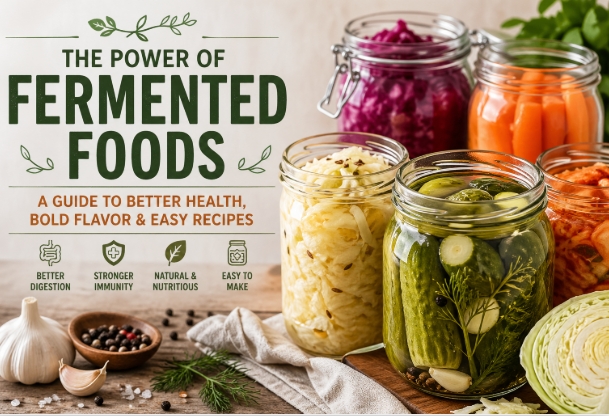
Fermented foods have been enjoyed for thousands of years, long before refrigeration existed. From tangy pickles to probiotic-rich yogurt, fermentation is both a preservation method and a powerful way to enhance nutrition. Today, fermentation is making a major comeback—not just for its bold flavors, but for its impressive health benefits.
In this guide, you’ll learn why fermented foods are so good for you, how to ferment foods safely at home, which foods are best to start with, and a few easy recipes—including classic pickles.

What Is Fermentation?
Fermentation is a natural process where microorganisms like bacteria and yeast break down sugars into acids, gases, or alcohol. In food fermentation, beneficial bacteria—especially those involved in Lactic Acid Fermentation—convert sugars into lactic acid. This not only preserves the food but also gives it that signature tangy flavor.
Why Fermented Foods Are So Healthy
1. Gut Health & Probiotics
Fermented foods are rich in beneficial bacteria, often referred to as probiotics. These microbes support digestion, help balance gut flora, and may reduce bloating and inflammation.
2. Improved Nutrient Absorption
Fermentation can increase the bioavailability of nutrients like vitamins B and C, magnesium, and iron, making them easier for your body to absorb.
3. Stronger Immune System
A healthy gut plays a key role in immune function. Regular consumption of fermented foods may help your body better fight off illness.
4. Better Digestion
Fermentation partially breaks down food, making it easier to digest—especially helpful for people sensitive to certain foods like dairy or fiber-rich vegetables.

Kamenstein 20-Jar Revolving Stainless Steel Countertop Spice Rack. You can refill these spices FOR FREE for up to 5 years!
Best Foods to Ferment
Some foods ferment more easily and safely than others. These are great for beginners:
Vegetables (Top Choice)
- Cucumbers (pickles)
- Cabbage (sauerkraut, kimchi)
- Carrots
- Radishes
- Garlic
Dairy
- Yogurt
- Kefir
Grains & Legumes
- Sourdough bread
- Tempeh
Fruits (with caution)
- Apples
- Mango
- Pineapple
Fruits ferment quickly due to their sugar content, so they require extra attention to avoid spoilage.
Are There Foods You Should NOT Ferment?
Yes—some foods are not ideal or require advanced techniques:
- High-fat foods (like oils or fatty meats) – prone to spoilage rather than fermentation
- Very soft fruits (like bananas) – tend to break down too quickly
- Low-water vegetables (like potatoes) – not suitable for simple brine fermentation
- Certain raw beans – can contain toxins unless properly prepared
When in doubt, stick with sturdy vegetables like cabbage, cucumbers, and carrots.

How to Ferment Food at Home (Step-by-Step Guide)
What You’ll Need:
- Fresh vegetables or fruit
- Salt (non-iodized is best)
- Filtered water
- Glass jars
- Optional: spices, herbs, garlic
Basic Fermentation Process:
- Prep Your Ingredients
Wash and chop your vegetables. - Make a Brine
Mix about 1–2 tablespoons of salt per quart of water. - Pack the Jar
Place your veggies tightly into a jar and pour brine over them until fully submerged. - Keep Everything Submerged
Use a fermentation weight or small object to keep food under the liquid. - Cover and Wait
Cover loosely and let sit at room temperature (65–75°F) for 3–7 days. - Taste and Store
Once it reaches your desired flavor, move it to the fridge to slow fermentation.
Helpful Fermentation Tips
- Always keep food submerged to prevent mold
- Use clean equipment to avoid contamination
- If it smells rotten (not sour), discard it
- Start small—fermentation gets stronger over time
- Burp jars daily if tightly sealed to release gas
Easy Fermented Recipes

1. Classic Homemade Pickles
Ingredients:
- 4–5 cucumbers
- 2 cups water
- 1 tablespoon salt
- 2 cloves garlic
- Fresh dill
Instructions:
- Dissolve salt in water to make brine.
- Place cucumbers, garlic, and dill into a jar.
- Pour brine over until fully submerged.
- Ferment at room temperature for 3–5 days.
- Refrigerate and enjoy!
Health Highlight: Cucumbers are hydrating and low in calories, while fermentation adds gut-friendly probiotics.

2. Simple Sauerkraut
Ingredients:
- 1 head cabbage
- 1 tablespoon salt
Instructions:
- Shred cabbage and place in a bowl.
- Massage with salt until it releases liquid.
- Pack tightly into a jar, ensuring liquid covers cabbage.
- Ferment for 1–2 weeks.
- Refrigerate when ready.
Health Highlight: Cabbage is rich in vitamin C and fiber, and fermentation boosts its digestive benefits.

3. Fermented Carrots with Garlic
Ingredients:
- 4–5 carrots (cut into sticks)
- 2 cups water
- 1 tablespoon salt
- 2 cloves garlic
- Optional: chili flakes
Instructions:
- Prepare brine by dissolving salt in water.
- Place carrots and garlic into a jar.
- Cover with brine and keep submerged.
- Ferment for 5–7 days.
- Refrigerate once tangy.
Health Highlight: Carrots are high in beta-carotene, which supports eye health, and fermentation enhances nutrient absorption.
Final Thoughts
Fermentation is one of the simplest and most rewarding ways to improve your diet. It transforms everyday foods into nutrient-rich, probiotic powerhouses that support gut health, digestion, and overall wellness. Whether you’re making crunchy pickles, tangy sauerkraut, or flavorful fermented carrots, the process is approachable—even for beginners.
Start small, experiment with flavors, and enjoy the benefits of this ancient practice right in your own kitchen.
I am an affiliate marketer who uses affiliate links. Some links are for Amazon.
I hope you enjoyed reading this and find interest in having your own fermentation projects! Feel free to comment! Subscribe today and don’t miss out on any of these blogs! Cheers to your better health!





Leave a Reply