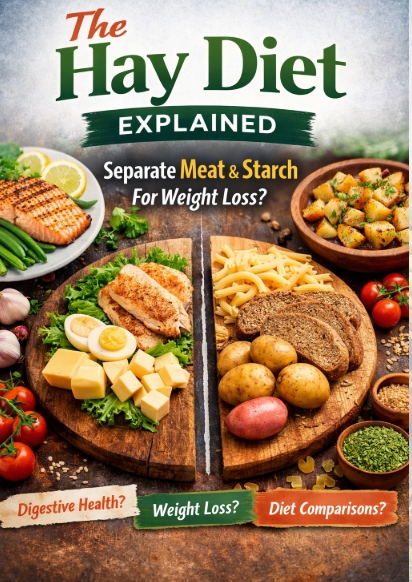
If you’ve ever heard the advice “don’t mix protein and starch,” you’ve encountered the foundation of the Hay Diet, also known as a food-combining diet. Developed in the early 1900s by physician William Howard Hay, this eating style is built on the belief that certain foods digest better when eaten separately—especially proteins and starches.
Supporters claim it improves digestion, increases energy, and promotes weight loss. Critics argue the digestive system is fully capable of handling mixed meals. So what’s the truth? Let’s explore how the Hay Diet works, its potential health benefits, whether it supports weight loss, and how it compares to other popular diets like Flexitarian, Mediterranean, and Keto.
What Is the Hay Diet?
The Hay Diet divides foods into categories and recommends eating certain groups separately. The most well-known rule is:
Do not combine protein foods with starchy foods in the same meal.
Protein Foods
- Meat
- Poultry
- Fish
- Eggs
- Cheese

Ninja Indoor Grill and Air Fryer. Foodi Smart XL. 6-in-1 Grill, Air Fry, Roast, Bake, Broil, Dehydrate & Crisp. Smart Thermometer & Splatter Shield. Dishwasher Safe Parts.
Starchy Foods
- Bread
- Rice
- Pasta
- Potatoes
- Grains
Non-starchy vegetables are generally considered “neutral” and can be eaten with either group. Fruit is often eaten alone or in specific combinations depending on the version of the plan.
For example:
- Steak and potatoes = not allowed
- Chicken and broccoli = allowed
- Rice and roasted vegetables = allowed
Why Does the Hay Diet Separate Meat and Starch?
The theory behind the diet is that proteins and starches require different digestive environments. Proteins are believed to need an acidic environment, while starches require a more alkaline one. Combining them, according to the theory, supposedly causes incomplete digestion, bloating, fermentation, and even weight gain.
However, modern understanding of digestion shows that the human digestive system produces a variety of enzymes and acids that allow it to break down mixed meals efficiently. The stomach remains acidic regardless of whether you eat protein, carbohydrates, or both together. The small intestine then continues breaking down all macronutrients simultaneously.
So biologically, there is no strong evidence that mixing protein and starch causes digestive conflict in healthy individuals.

Super Enzymes with Prebiotics & Probiotics, 240 Veggie Capsules. High Potency Digestive Enzymes For Women & Men. Probiotic, Bromelain, Psyllium Husk & More. Immune & Gut Health Support
What Health Benefits Do People Report?
Even though the core food-combining theory is debated, many people say they feel better on the Hay Diet. Here’s why that might be:
1. Simpler Meals
Meals are often lighter and less heavy because they avoid rich combinations like creamy pasta with meat and bread. Simpler meals can feel easier to digest simply because they’re smaller and less calorie-dense.
2. Increased Vegetable Intake
Non-starchy vegetables play a central role in the Hay Diet. This naturally increases fiber, vitamins, minerals, and antioxidants.
3. Reduced Processed Foods
Many processed convenience foods combine refined starches, unhealthy fats, and proteins in one dish. Since the Hay Diet discourages mixed meals, it often reduces intake of highly processed foods.
4. More Mindful Eating
Following specific food rules increases awareness around meal choices. That mindfulness alone can improve portion control and food quality.

Gardyn. Grow your own produce at home! Huge variety to choose from and pesticide-free!
Does the Hay Diet Help With Weight Loss?
It can — but likely not for the reason it claims.
People who lose weight on the Hay Diet usually do so because:
- They eat fewer calories overall
- They reduce processed foods
- They increase vegetable intake
- They eat more structured, intentional meals
There is no strong scientific evidence that separating protein and starch boosts metabolism or enhances fat burning on its own. Weight loss typically occurs when calorie intake is reduced over time.
However, if someone finds the Hay Diet easier to follow than traditional calorie counting, it can be an effective structure for weight management.
Is the Hay Diet for Everyone?
The Hay Diet is not medically required for most people. It may appeal to:
- Individuals who prefer structured rules
- Those looking to simplify meals
- People who feel uncomfortable after heavy mixed meals
However, it may not be ideal for:
- Athletes who require higher calorie intake
- People with diabetes who benefit from balanced meals containing protein and fiber alongside carbohydrates
- Anyone with a history of restrictive or rule-based dieting patterns
The rigidity of separating foods at every meal can make social dining and meal planning more complicated.

Elama Gia 24 Piece Round Stoneware Dinnerware Set in Dark Green
Does It Have to Be Followed at Every Meal?
There is no medical requirement to follow food combining rules strictly. Some people choose to:
- Follow it for dinner only
- Practice it a few days per week
- Use it occasionally after periods of heavy eating
The effectiveness of the diet depends on consistency and sustainability. If it causes stress or feels overly restrictive, it may not be worth continuing.
Hay Diet vs. Flexitarian Diet
Although both diets often increase plant intake, their philosophies differ significantly.
Flexitarian Diet
- Primarily plant-based
- Allows meat occasionally
- No rules about combining food groups
- Focuses on overall dietary pattern rather than meal structure
Hay Diet
- Allows meat regularly
- Focuses on separating protein and starch
- Emphasizes meal composition rules
The Flexitarian approach centers on reducing meat intake and increasing plant foods for health and environmental benefits. The Hay Diet centers on digestive compatibility.
Hay Diet Compared to Other Popular Diets
Mediterranean Diet
- Encourages fruits, vegetables, legumes, whole grains, olive oil, fish
- Allows mixed meals freely
- Emphasizes balance and long-term sustainability
Keto Diet
- Very low in carbohydrates
- High in fat
- Avoids starches almost entirely
- Often combines protein and fat together
Paleo Diet
- Focuses on whole foods
- Eliminates grains and processed foods
- No rules about food combining
Intermittent Fasting
- Focuses on timing of meals
- No food pairing restrictions
The Hay Diet is unique because its primary rule revolves around separating protein and starch. Most other diets focus on food quality, macronutrient balance, or timing rather than food combinations.
3 Hay Diet–Friendly Recipes

1. Lemon Herb Salmon with Steamed Broccoli (Protein Meal)
Ingredients
- 2 salmon fillets
- 1 tablespoon olive oil
- 1 lemon (zest and juice)
- 2 cloves garlic, minced
- Salt and pepper
- 2 cups broccoli florets
Instructions
- Preheat oven to 400°F.
- Mix olive oil, lemon juice, zest, garlic, salt, and pepper.
- Brush over salmon and bake 10–14 minutes.
- Steam broccoli until tender.
- Serve salmon with broccoli and a simple side salad if desired.

2. Roasted Sweet Potato & Vegetable Bowl (Starch Meal)
Ingredients
- 2 medium sweet potatoes
- 1 zucchini, chopped
- 1 bell pepper, chopped
- 1 tablespoon olive oil
- Salt, pepper, paprika
Instructions
- Preheat oven to 425°F.
- Dice sweet potatoes and toss with olive oil and seasoning.
- Roast 25 minutes.
- Add zucchini and bell pepper and roast another 10–15 minutes.
- Serve as a hearty vegetable bowl.

3. Fresh Garden Vegetable Soup (Neutral Meal)
Ingredients
- 2 cups chopped tomatoes
- 1 cup zucchini
- 1 cup green beans
- 1 carrot, diced
- 2 cups vegetable broth
- Fresh parsley
- Salt and pepper
Instructions
- Add vegetables and broth to a pot.
- Simmer 20–25 minutes until tender.
- Season with salt, pepper, and fresh parsley.
Final Thoughts
The Hay Diet is a structured food-combining plan that separates protein and starch in meals. While the scientific foundation behind digestive incompatibility is not strongly supported, some people experience benefits due to improved food quality, reduced processed food intake, and simplified meals.
Weight loss may occur, but it is most likely due to lower calorie intake and better dietary choices rather than food separation alone.
If you enjoy structured eating patterns and feel better with lighter meals, the Hay Diet may be worth experimenting with. However, for long-term health, focusing on whole foods, balanced nutrition, and sustainable habits remains the most evidence-supported approach.
Sources
- Academy of Nutrition and Dietetics – Overview of digestion and balanced diet principles
- Harvard T.H. Chan School of Public Health – Healthy Eating Plate guidelines
- International Food Information Council – Food combining overview
- WebMD – Flexitarian diet overview




Leave a Reply