In a previous blog, we explored what oxidative stress is, why it matters, and how it can increase the risk of aging and chronic disease. Now, let’s take that knowledge a step further. If you’re ready to protect your cells, reduce free radical damage, and support long-term wellness, building meals rich in antioxidants is one of the smartest daily habits you can adopt.
Here is the previous blog:
This guide gives you a sample one-day antioxidant meal plan designed to fight oxidative stress, highlighting what to eat—and what to avoid—for maximum benefit.

Food for Thought Meal and Wellness Planner
Key Principles of an Antioxidant-Friendly Diet
Before diving into the antioxidant meal plan, keep these guidelines in mind:
- Eat the rainbow: Colorful fruits and vegetables are packed with antioxidants like carotenoids, flavonoids, and polyphenols.
- Balance macros: Pair carbs with protein and healthy fats to avoid blood sugar spikes, which increase oxidative stress.
- Choose whole, minimally processed foods: Refined sugars, fried foods, and processed meats add to oxidative burden.
- Hydrate smartly: Water, green tea, or herbal teas hydrate and supply protective plant compounds.
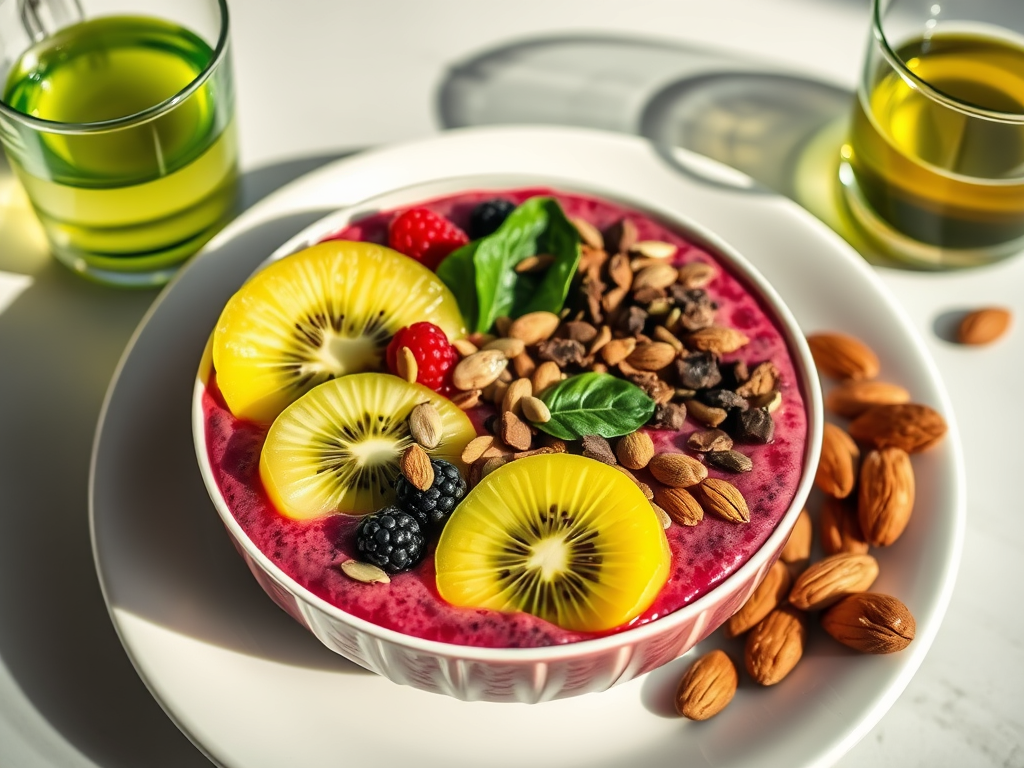
🥣 Breakfast: Berry and Spinach Antioxidant Smoothie Bowl
Ingredients
- 1 cup spinach
- 1 cup frozen blueberries and strawberries
- ½ banana (for creaminess)
- 1 Tbsp chia seeds
- 1 Tbsp almond butter
- 1 cup unsweetened almond milk
Toppings: sliced kiwi, pumpkin seeds, and a sprinkle of cacao nibs
Why it works: Berries and spinach are rich in vitamin C, polyphenols, and carotenoids. Chia seeds and almond butter provide vitamin E and omega-3s, while cacao nibs add flavonoids for extra cell protection.

🥗 Mid-Morning Snack: Green Tea and Almonds
- 1 cup green tea (unsweetened)
- 1 small handful of raw almonds
Why it works: Green tea contains catechins (powerful antioxidants), while almonds are high in vitamin E, protecting cell membranes from oxidative damage.

🥙 Lunch: Mediterranean Chickpea Salad
Ingredients
- 1 cup cooked chickpeas
- 1 cup cherry tomatoes
- ½ cucumber, diced
- ½ red bell pepper, chopped
- 2 Tbsp olives
- 1 Tbsp extra virgin olive oil
- Juice of ½ lemon
- Fresh parsley and oregano
Why it works: Chickpeas and vegetables provide fiber, vitamin C, and polyphenols. Olive oil and olives supply heart-healthy monounsaturated fats, while herbs add plant-based antioxidants.
🍵 Afternoon Snack: Carrot Sticks with Hummus
- Fresh carrot sticks, cucumber slices, or celery
- ¼ cup hummus
Why it works: Carrots provide beta-carotene (a precursor to vitamin A), while hummus offers protein, fiber, and healthy fats—all helping stabilize blood sugar and fight free radical damage.

🍽️ Dinner: Grilled Salmon with Roasted Vegetables
Ingredients
- 1 salmon fillet (wild-caught if possible)
- 1 cup broccoli florets
- 1 cup Brussels sprouts, halved
- 1 Tbsp olive oil
- Pinch of turmeric, garlic, and black pepper
Directions: Roast vegetables at 400°F for 20–25 minutes until golden. Grill or bake salmon with light seasoning.
Why it works: Salmon is rich in omega-3 fatty acids and astaxanthin, a powerful antioxidant. Roasted cruciferous vegetables add sulforaphane, vitamin C, and fiber for detoxification and antioxidant defense.

🍫 Evening Treat: Dark Chocolate with Walnuts
- 1 oz dark chocolate (70% cocoa or higher)
- A few walnuts
Why it works: Dark chocolate offers flavonoids that improve circulation and reduce oxidative stress, while walnuts are high in polyphenols and omega-3s for added protection.
Foods to Avoid in Your Daily Plan
To keep oxidative stress low, avoid:
- Fried foods and trans fats (fast food, packaged snacks)
- Refined sugar and carbs (soda, white bread, pastries)
- Processed meats (bacon, sausages, hot dogs)
- Excess alcohol
- Highly refined vegetable oils that oxidize easily under heat

Final Thoughts
This antioxidant meal plan is designed to be practical, delicious, and effective at fighting oxidative stress. By focusing on whole foods, colorful produce, healthy fats, and lean proteins, you give your body the fuel it needs to neutralize free radicals and stay resilient.
Over time, consistent choices like these not only protect against chronic disease but also support healthier skin, sharper cognition, and better energy levels.
I am an affiliate marketer and use affiliate links. Any support you give is greatly appreciated! I hope you enjoyed this blog and apply it to your lifestyle! Please feel free to comment and subscribe to this free blog! I share many helpful tips and healthy recipes. You don’t want to miss out!



Leave a Reply