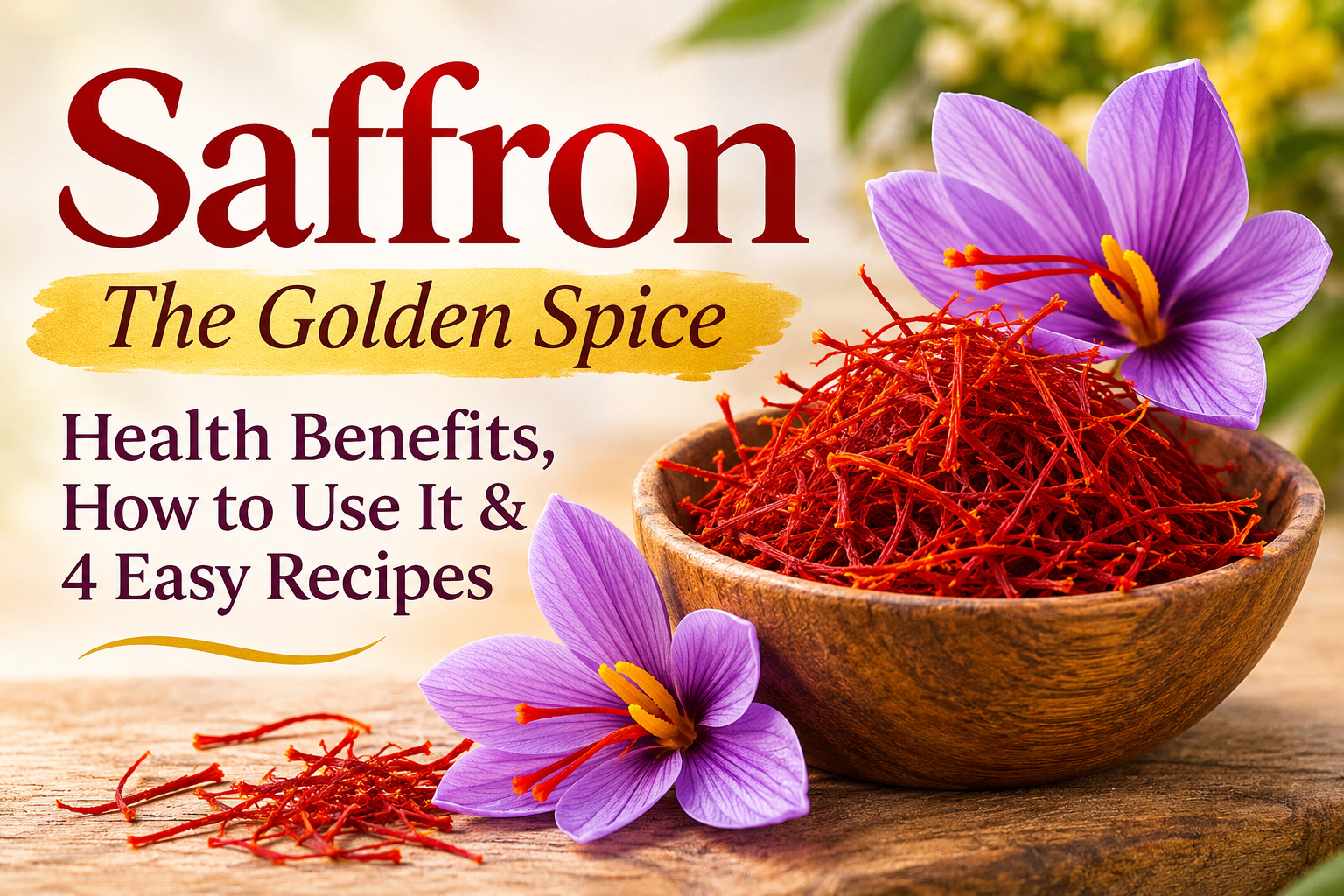
Saffron is often called the golden spice, and for good reason. Known for its beautiful golden-red color, delicate floral aroma, and slightly sweet, earthy flavor, saffron is one of the most valuable spices in the world. It has been used for centuries in cooking, traditional remedies, and wellness practices.
But saffron is more than just a luxurious ingredient that adds flavor and color to food. This little spice contains powerful plant compounds with antioxidant and anti-inflammatory properties that have attracted considerable attention from modern researchers.
From supporting mood and brain health to potentially benefiting heart health, blood sugar regulation, and eye health, saffron offers several interesting possibilities for overall wellness.
Let’s explore what makes saffron so special, its nutritional compounds, how it may benefit the body, and some simple ways to incorporate it into your everyday routine.

Organic Saffron Threads by Banu Saffron – Award Winning All Red Certified Organic Grade A Saffron, Premium Crocus Sativus Gourmet Spice for Tea, Rice, Paella, Risotto & Cooking – 1 Grams (0.035 Ounce).
What Is Saffron?
Saffron comes from the flower of the Crocus sativus, commonly known as the saffron crocus. The spice is made from the tiny red-orange stigmas inside each flower. These delicate threads must be harvested by hand, which is one reason saffron is considered one of the most expensive spices in the world.
Saffron has been used in traditional medicine for thousands of years, particularly in parts of the Middle East, India, and the Mediterranean.
What makes saffron especially interesting is its collection of naturally occurring plant compounds, including:
- Crocin: Responsible for saffron’s vibrant color and known for its antioxidant activity.
- Crocetin: A carotenoid compound being studied for its antioxidant and potential neuroprotective effects.
- Safranal: Contributes to saffron’s distinctive aroma and has demonstrated antioxidant activity in research.
- Picrocrocin: Responsible for much of saffron’s characteristic bitter taste.
These compounds help explain why researchers are interested in saffron’s potential health benefits.
7 Potential Health Benefits of Saffron
Saffron contains several bioactive compounds that may support different systems throughout the body. Although research is promising, some benefits are better established than others, and more human studies are needed.
1. May Support Mood and Emotional Wellness
One of the most researched benefits of saffron is its potential effect on mood.
Some clinical studies suggest that saffron supplementation may help improve symptoms of mild to moderate depression. Researchers believe its active compounds may influence neurotransmitters involved in mood regulation, including serotonin.
Saffron is also being studied for its potential role in reducing occasional feelings of stress and anxiety.
While it should never replace professional mental health treatment, saffron is an interesting natural ingredient that researchers continue to investigate for emotional wellness.
2. Provides Powerful Antioxidants
Antioxidants help protect the body’s cells against oxidative stress, which occurs when unstable molecules called free radicals accumulate.
Oxidative stress is associated with cellular damage and is involved in the development of various chronic conditions.
Saffron’s crocin, crocetin, and safranal compounds have demonstrated antioxidant activity. Including antioxidant-rich foods and spices in your diet is one way to support your body’s natural defenses.

Saffron for All Seasons: Holistic Recipes for Optimum Health & Jubilant Wellness
by Anass Sentissi.
3. May Support Brain Health and Memory
Saffron is being investigated for its potential neuroprotective properties.
Some research suggests that its antioxidant compounds may help protect brain cells from oxidative stress. Studies have also explored saffron’s potential effects on memory, learning, and cognitive function.
Early research involving people with mild cognitive impairment and Alzheimer’s disease has produced interesting findings, although the evidence is not yet strong enough to recommend saffron as a treatment or preventative measure.
4. May Support Eye Health
Another interesting area of saffron research involves vision and retinal health.
Crocin and crocetin have antioxidant properties that may help protect delicate cells in the eyes from oxidative damage.
Some human studies have investigated saffron supplementation in people with age-related macular degeneration, with preliminary findings suggesting possible improvements in certain measures of visual function.
This makes saffron an interesting spice to watch in the growing field of eye health research.
5. May Support Heart Health
Heart health is another area where saffron’s antioxidant properties may be beneficial.
Research suggests that saffron compounds may help support healthy inflammatory responses and blood vessel function. Some clinical studies have also reported improvements in certain cardiovascular markers, including blood lipids and blood pressure.
However, findings are mixed, and saffron should not replace heart-healthy eating habits, exercise, or prescribed cardiovascular medications.
6. May Help Support Healthy Blood Sugar Levels
Saffron has also attracted attention for its potential effects on blood sugar regulation.
Preliminary research suggests that its antioxidant compounds may influence insulin sensitivity, glucose metabolism, and inflammatory processes associated with metabolic health.
Some small clinical trials have reported improvements in blood glucose measurements, but the evidence remains limited.
For people interested in maintaining healthy blood sugar levels, saffron can be enjoyed as part of a balanced diet, but it should not be considered a substitute for established diabetes management.
7. May Help Support Healthy Inflammatory Responses
Chronic inflammation is associated with numerous health conditions, including cardiovascular disease, metabolic disorders, and certain inflammatory conditions.
Saffron contains plant compounds that have demonstrated anti-inflammatory activity in laboratory and animal studies. Some human research has also explored its effects on inflammatory markers.
Although more research is needed, adding antioxidant-rich spices such as saffron to a varied diet can be one small part of an overall healthy lifestyle.

Saffron Supplements 88.5mg Mood, Focus, Vision, Energy Support.
How to Take Saffron
There are several ways to enjoy saffron, and you don’t need much to benefit from its flavor and naturally occurring plant compounds.
1. Saffron tea: Steep a few saffron threads in hot water for approximately 5–10 minutes. You can add lemon, honey, or cinnamon for additional flavor.
2. Saffron milk: Add a few threads to warm milk or an unsweetened milk alternative. Allow them to steep before drinking. This is a popular traditional beverage in India, sometimes called Kesar milk.
3. Cooking with saffron: Add saffron to rice, soups, seafood, sauces, and vegetable dishes. Soaking the threads in a little warm water before adding them helps release their color and flavor.
4. Saffron supplements: Saffron is also available in capsules and standardized extracts. Some clinical trials have used approximately 28–30 mg daily, but there is no universally established dose for general wellness. Supplements should be discussed with a healthcare professional before use.
What Benefits Have Been Studied in Saffron Supplements?
Here are the areas where supplementation has attracted the most research:
| Potential benefit | Research |
|---|---|
| Mood and emotional wellness | Promising human clinical evidence |
| Stress and anxiety | Promising, but mixed findings |
| Memory and cognitive health | Preliminary human evidence |
| Eye health | Some encouraging clinical studies |
| Antioxidant protection | Supported by laboratory research |
| Inflammation | Primarily preliminary research |
| Blood sugar regulation | Limited clinical evidence |
| Heart health | Some encouraging but mixed findings |
One particularly interesting finding comes from a 2026 systematic review and meta-analysis of 34 randomized controlled trials involving 1,769 adults. Researchers found improvements in self-reported depression and anxiety symptoms among people taking saffron supplements, although some other clinical measures did not show significant improvements. PubMed+1
What Dosage Is Typically Used?
Many clinical studies have used approximately 28–30 mg of standardized saffron extract daily, often divided into two doses.
This is a research dosage, not a universal recommendation. Different extracts have different concentrations of active compounds, so the supplement label matters.
When choosing a supplement, look for:
- Standardized saffron extract.
- Clearly identified Crocus sativus ingredients.
- Third-party quality testing when available.
- Transparent labeling of the amount per serving.
There are also some important precautions:
- Pregnancy: Avoid medicinal doses and saffron supplements during pregnancy because concentrated saffron may stimulate uterine activity.
- Medications: Speak with your healthcare provider before taking saffron supplements, especially if you use blood pressure medication, blood sugar medication, blood thinners, or antidepressants.
- Existing health conditions: People with underlying medical conditions should discuss supplementation with a healthcare professional.
4 Simple Ways to Use Saffron: Recipes and Remedies
Here are four simple ways to incorporate this golden spice into your routine.

1. Soothing Saffron Tea
Ingredients:
- 4–6 saffron threads
- 1 cup hot water
- 1 teaspoon lemon juice
- 1 teaspoon honey or monk fruit sweetener (optional)
- Small cinnamon stick (optional)

The Homebody Club Cozy Armchair Illustration Mug.
Directions:
- Place the saffron threads in a cup.
- Pour hot water over the threads.
- Allow to steep for 5–10 minutes.
- Add lemon juice and your preferred sweetener.
- Enjoy warm.
This is a simple way to enjoy saffron’s aroma and antioxidant-containing plant compounds without needing a supplement.

2. Golden Saffron Milk
Ingredients:
- 1 cup unsweetened almond milk or regular milk
- 4–6 saffron threads
- 1/4 teaspoon cinnamon
- Pinch of cardamom
- Monk fruit or stevia to taste
Directions:
- Warm the milk in a small saucepan over low heat.
- Add saffron, cinnamon, and cardamom.
- Allow the mixture to steep gently for about 5 minutes.
- Sweeten to taste and serve warm.
This comforting beverage is a nice alternative to sugary drinks and can be enjoyed as part of an evening relaxation routine.

3. Golden Saffron Rice
Ingredients:
- 1 cup basmati rice
- 1 3/4 cups water or low-sodium vegetable broth
- 5–8 saffron threads
- 1 tablespoon olive oil
- 1/4 teaspoon salt
- 1 tablespoon chopped parsley (optional)
Directions:
- Rinse the rice until the water runs mostly clear.
- Soak saffron threads in 2 tablespoons of warm water for 5–10 minutes.
- Heat olive oil in a saucepan and add the rice.
- Stir in the water or broth, salt, and saffron infusion.
- Bring to a boil, cover, and reduce the heat.
- Cook for approximately 15 minutes, or until the liquid is absorbed and rice is tender.
- Fluff with a fork and garnish with parsley.
This colorful side dish pairs nicely with grilled chicken, fish, roasted vegetables, or Mediterranean-inspired meals.

4. Lemon Garlic Saffron Chicken
Ingredients:
- 4 boneless, skinless chicken thighs or breasts
- 3 tablespoons olive oil
- 2 garlic cloves, minced
- 1/2 teaspoon saffron threads
- 2 tablespoons warm water
- Juice of 1 lemon
- 1 teaspoon lemon zest
- 1/2 teaspoon paprika
- 1/2 teaspoon dried oregano
- Salt and black pepper to taste
- Fresh parsley for garnish
- Lemon slices for serving
Directions:
- Place saffron threads in 2 tablespoons of warm water and allow them to steep for 10 minutes.
- In a small bowl, combine olive oil, garlic, lemon juice, lemon zest, paprika, oregano, salt, pepper, and the saffron infusion.
- Place chicken in a baking dish and pour the marinade over it. Turn the chicken to coat evenly.
- Allow the chicken to marinate for 20–30 minutes, if time permits.
- Preheat oven to 400°F.
- Bake for approximately 20–30 minutes, depending on the thickness and cut of chicken, until the internal temperature reaches 165°F.
- Garnish with fresh parsley and lemon slices.
Serving Suggestions:
Serve with roasted vegetables, quinoa, cauliflower rice, or golden saffron rice.
This is a flavorful, soothing drink that combines saffron with ginger and lemon. Honey adds sweetness, while ginger provides its own naturally occurring plant compounds.
Note: These beverages are food-based ways to enjoy saffron, not proven treatments for inflammation, anxiety, or other medical conditions.
Final Thoughts: Is Saffron Worth Adding to Your Wellness Routine?
Saffron is a fascinating spice with a long history of culinary and traditional medicinal use. Its antioxidant-rich compounds, including crocin, crocetin, and safranal, have made it the subject of growing scientific interest.
From potentially supporting mood and cognitive health to its possible benefits for eye health, cardiovascular wellness, and healthy inflammatory responses, saffron has several promising areas of research.
Although scientists are still studying many of these benefits, incorporating small amounts of saffron into your meals and beverages is an enjoyable way to add variety and plant-based compounds to your diet.
Whether you choose to make a warm cup of saffron tea, prepare golden rice, or enjoy a comforting glass of saffron milk, this beautiful spice offers a little something special for your kitchen and your wellness routine.
As with any natural remedy, remember that saffron works best as part of a balanced lifestyle rather than as a replacement for medical care.
I am an affiliate marketer and I use affiliate links. Some links are from Amazon.
I hope you enjoyed learning about saffron and the ways you can use it! Feel free to comment, like, share, and subscribe. Subscription is always free. Have a wonderful day and cheers to your better health!
References and Further Reading
- Saffron and Its Active Ingredients Against Human Disorders – Clinical Evidence Review
- Saffron and Cognitive Function – Systematic Review
- Saffron Supplementation and Blood Pressure – Systematic Review




Leave a Reply