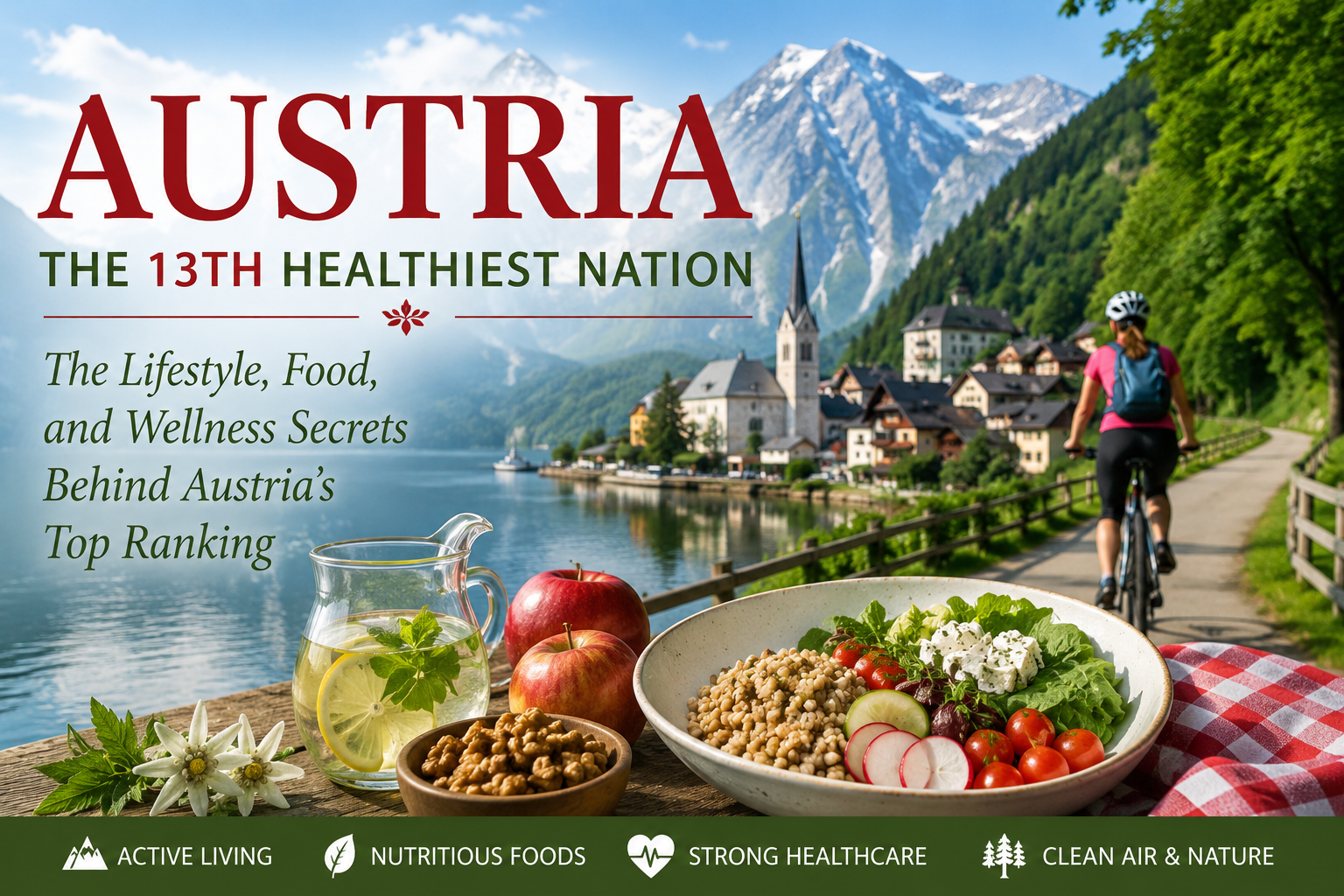

Austria may be best known for its breathtaking Alpine landscapes, classical music, charming villages, and rich cultural history, but there is another reason this European country deserves attention: its people enjoy remarkably good health.
According to the 2019 Bloomberg Healthiest Country Index, Austria ranked 13th among 169 countries, with a score of 86.3. Bloomberg’s index considered factors such as life expectancy, health risks, obesity, tobacco use, environmental conditions, and access to clean water and sanitation.
Although the Bloomberg index is not an annual ranking today, more recent health data continue to show that Austria performs well in many important areas. The OECD reports that life expectancy in Austria reached 81.9 years, about 0.8 years higher than the OECD average. Austria also has lower-than-average preventable and treatable mortality and strong access to healthcare.
So, what makes Austria such a healthy country? The answer isn’t one particular food, supplement, or exercise routine. Instead, it is a combination of active living, nutritious foods, access to healthcare, beautiful natural surroundings, and a culture that encourages people to spend time outdoors.

Mason Jars, 16 oz Overnight Oats Containers with Lids, Spoons & 2.7 oz Jars.
An Active Austrian Lifestyle
One of the most important characteristics of Austrian life is movement.
Austria is home to the Alps, extensive forests, lakes, hiking trails, and beautiful countryside. Outdoor recreation is deeply integrated into everyday life and leisure. Hiking, skiing, cycling, walking, swimming, and other outdoor activities are popular ways to stay active.
This active culture may contribute to Austria’s relatively favorable physical-activity statistics. According to the OECD’s 2025 data, 23% of Austrian adults did not get sufficient physical activity, compared with 30% across the OECD. Austria also had a self-reported adult obesity rate of 17%, compared with an OECD average of 19%.
The lesson here is important: exercise doesn’t necessarily have to mean spending an hour at a gym. In Austria, physical activity can be part of recreation and daily life.
A weekend hike through the mountains, walking through town, cycling, skiing during the winter, or simply spending time outdoors can all contribute to an active lifestyle.
The Austrian Approach to Food
Austrian cuisine is hearty and traditional, and it would be inaccurate to describe it as a purely “health food” cuisine. Classic dishes include schnitzel, sausages, dumplings, rich pastries, breads, cheeses, and desserts such as strudel.
Yet traditional Austrian eating also includes many nutritious foods, particularly vegetables, potatoes, legumes, fruits, grains, dairy products, fish, nuts, and seeds.
Austria’s official dietary guidelines recommend eating five servings of vegetables, legumes, and fruit each day, ideally including three servings of vegetables or legumes and two servings of fruit. The guidelines also recommend choosing whole-grain products and eating fish regularly.
The Austrian food pyramid recommends approximately four servings of grains, bread, pasta, rice, or potatoes daily, with whole grains preferred. It also recommends three servings of milk or dairy products and one to two tablespoons of vegetable oils, nuts, or seeds each day.
Meat isn’t eliminated from the diet, but moderation is emphasized. The guidelines recommend fish one or two times per week and limiting meat and sausage consumption. Red meat and processed meats are specifically recommended in moderation.
This creates a dietary pattern that has some similarities to other healthy European eating patterns: plenty of plant foods, moderate portions of animal foods, whole grains, and an emphasis on fresh and seasonal ingredients.

Gardyn Home waters, lights & monitors your plants automatically. No soil, sunlight or green thumb required!
- Grow 30 fresh greens, herbs & vegetables in 2 sq feet
- 100+ plant varieties to choose from
- Zero pesticides, zero plastic, zero food waste
Fresh, Local, and Seasonal Foods
Austria’s geography also influences what people eat.
The country has a strong agricultural tradition, and regional foods remain an important part of Austrian culture. Seasonal fruits and vegetables, potatoes, grains, dairy products, and locally produced foods are common.
Austria’s health authorities encourage people to consider seasonality and regional availability when choosing fruits and vegetables. They also recommend using fresh foods and minimizing highly processed convenience foods.
That doesn’t mean Austrians never eat sweets, pastries, or rich foods. They certainly do. Austrian desserts are famous around the world.
The difference is that these foods can be enjoyed as part of an overall diet rather than necessarily being the foundation of every meal.
The Benefits of an Outdoor Lifestyle
Could Austria’s weather and climate contribute to its health?
Possibly—but probably indirectly.
Austria experiences four distinct seasons, including cold winters and warm summers. Its mountainous terrain provides opportunities for winter sports as well as summer recreation.
The climate itself doesn’t automatically make people healthier. In fact, cold winters can make outdoor activity more difficult for some people. What may matter more is the culture surrounding the environment.
Austria’s mountains, forests, lakes, and parks create countless opportunities for outdoor recreation. People can hike during warmer months and ski or participate in other winter sports when snow arrives.
Spending time in nature may also support mental well-being. Outdoor activities combine physical movement with exposure to natural environments, social interaction, and a break from sedentary routines.
Austria’s relatively clean environment may also play a role. OECD data show average exposure to fine particulate air pollution at 10.9 micrograms per cubic meter, slightly below the OECD average of 11.2.

MERACH Exercise Bike, Magnetic Friction Stationary Bike for Home with APP.
A Strong Healthcare System
Lifestyle isn’t the entire story.
Austria also benefits from a strong healthcare system. The OECD reports that the entire population is covered for a core set of healthcare services, while 78% of people surveyed reported being satisfied with the availability of quality healthcare. Only 1% reported unmet healthcare needs, compared with 3.4% across the OECD.
Austria also has a relatively large healthcare workforce, with 5.5 practicing physicians per 1,000 people, compared with an OECD average of 3.9.
Access to healthcare doesn’t necessarily prevent every disease, but it can help people receive preventive services, diagnosis, treatment, and ongoing care when they need it.
Austria Isn’t Perfect
It is important not to romanticize Austria’s health ranking.
Even one of the world’s healthiest countries has significant health challenges. Austria’s smoking rate remains relatively high. In 2025, about 20.6% of adults smoked daily, compared with an OECD average of 14.8%. Alcohol consumption was also higher than the OECD average.
These statistics show that a high national health ranking doesn’t mean everyone in the country follows a perfect lifestyle.
Instead, national health is influenced by many factors working together.
What Can We Learn From Austria?
Austria’s example provides several practical lessons for anyone interested in living a healthier life.
Move more. Physical activity can be hiking, walking, cycling, swimming, skiing, or any activity you enjoy.
Eat more plants. Vegetables, fruits, legumes, potatoes, and whole grains form an important part of Austria’s dietary recommendations.
Choose whole foods more often. Fresh and minimally processed foods are encouraged over highly processed convenience foods.
Enjoy food without making every meal indulgent. Austrian cuisine demonstrates that traditional foods and occasional desserts can coexist with an otherwise balanced eating pattern.
Get outside. Austria’s lifestyle demonstrates how nature can become part of an active lifestyle rather than simply something to admire.
Take advantage of healthcare. Prevention, early detection, and access to quality medical care are important components of population health.

Maple Nut Kitchen Eastern Apple Pecan Paleo Grain-Free Granola 10 oz.
The Austrian Secret to Better Health
There may not be one “Austrian secret” to health. Instead, Austria demonstrates the power of combining many healthy habits.
An active lifestyle, nutritious foods, outdoor recreation, access to healthcare, relatively clean air, and a culture that values time spent in nature all contribute to the country’s impressive health outcomes.
Perhaps the biggest lesson is that healthy living doesn’t have to be extreme. It can be built into everyday life—through walking, eating seasonal foods, spending time outdoors, staying socially connected, and enjoying traditional meals in moderation.
Austria’s place among the world’s healthiest nations is therefore less about a single miracle food or health trend and more about creating an environment where healthy choices can become a natural part of everyday life.
I am an affiliate marketer. Some links I use are from Amazon.
Thanks for reading and I hope you enjoy learning about a few different cultures around the world. Feel free to leave a comment. Share this to your friends, and subscribe! Subscription is free! Have a wonderful day and cheers to your better health!
Resources
- Bloomberg Global Health Index Overview
- Spain Is Considered Healthiest Country, According to New Report
- Healthiest Countries 2025


Leave a Reply