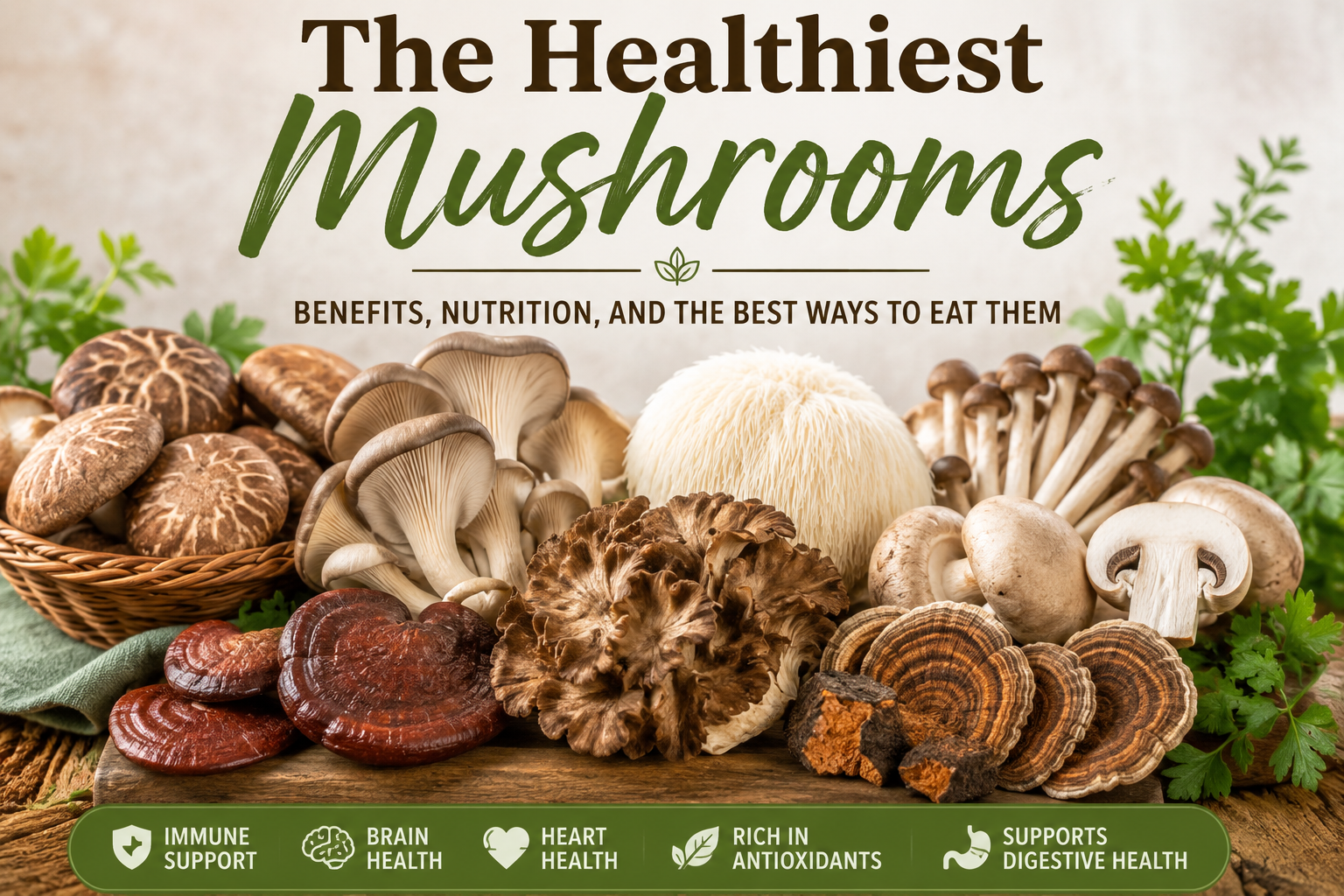
Mushrooms have been valued for centuries as both food and natural medicine. While they are technically fungi rather than vegetables, they are packed with nutrients that support overall health. Mushrooms are so health and many varieties contain antioxidants, vitamins, minerals, fiber, and unique compounds that may help strengthen the immune system, support brain health, improve heart health, and reduce inflammation.
Not all mushrooms offer the same nutritional profile. Some stand out because they contain powerful bioactive compounds that have been widely studied for their potential health benefits. Whether you’re adding mushrooms to soups, stir-fries, smoothies, or drinking them as tea, there are plenty of delicious ways to include them in your diet.
Let’s explore some of the healthiest mushrooms and learn the best ways to enjoy each one.

1. Lion’s Mane Mushroom
Lion’s Mane is one of the most popular medicinal mushrooms because of its potential benefits for the brain and nervous system. It contains compounds called hericenones and erinacines, which may stimulate the production of nerve growth factor (NGF), a protein that supports healthy nerve cells.
Health Benefits
- Supports memory and cognitive function
- May improve focus and concentration
- Helps protect nerve cells
- May reduce mild symptoms of anxiety and depression
- Rich in antioxidants that fight oxidative stress
Best Way to Eat It
Fresh Lion’s Mane has a mild seafood-like flavor that many people compare to crab or lobster.
The best ways to enjoy it include:
- Sautéed in butter or olive oil
- Added to pasta dishes
- Grilled as a meat substitute
- Mixed into soups
- Taken as a powdered supplement in coffee or smoothies
Cooking fresh Lion’s Mane helps soften its texture while preserving its flavor.

Lunakai USA Made Super Mushroom Gummies for Adults – 10-in-1 Adaptogenic Mushroom Supplement with Lion’s Mane – Daily Focus & Brain Support, 60ct
2. Shiitake Mushrooms
Shiitake mushrooms are a staple in Asian cuisine and are rich in vitamins B5 and B6, copper, selenium, and compounds that may help lower cholesterol.
Health Benefits
- Supports immune function
- May improve heart health
- Contains beta-glucans that support immunity
- Rich in antioxidants
- May help reduce inflammation
Best Way to Eat Them
Cooking shiitake mushrooms is recommended because raw mushrooms can be difficult to digest.
Try them:
- Stir-fried with vegetables
- Added to ramen or soups
- Roasted in the oven
- Mixed into rice dishes
- Included in omelets
Removing the tough stems before cooking improves texture.

DOU by Uncle Chen Chinese Sauce Gift Set – Sriracha, Sesame Oil & Chili Oil Full-size Trio, 60-Year Family Recipe (3-Pack, 50oz Total)
3. Oyster Mushrooms
Oyster mushrooms are low in calories but surprisingly rich in nutrients. They contain beta-glucans, ergothioneine (a powerful antioxidant), and several B vitamins.
Health Benefits
- Supports heart health
- May help lower cholesterol
- Rich in immune-supporting compounds
- Contains antioxidants that protect cells
- Good source of potassium
Best Way to Eat Them
Their delicate texture makes them ideal for:
- Stir-fries
- Pasta dishes
- Tacos
- Sheet pan dinners
- Air frying until crispy
They cook quickly, so avoid overcooking.

4. Maitake (Hen of the Woods)
Maitake mushrooms have been used in traditional Japanese medicine for hundreds of years. They’re known for their impressive beta-glucan content.
Health Benefits
- Supports healthy immune function
- May help regulate blood sugar
- Contains compounds that support heart health
- Rich in antioxidants
- Provides fiber for digestive health
Best Way to Eat Them
Maitake develops an excellent flavor when roasted.
Popular preparations include:
- Roasted with olive oil
- Mixed into grain bowls
- Added to soups
- Pan-fried
- Served alongside chicken or fish
Because they have many folds, rinse them gently to remove dirt before cooking.
5. Reishi Mushroom
Unlike many edible mushrooms, Reishi has a woody texture and bitter taste. It is rarely eaten whole but is widely consumed as a tea, powder, or supplement.
Health Benefits
- Supports immune health
- May improve sleep quality
- Helps the body adapt to stress
- Rich in antioxidants
- May help support healthy blood pressure and cholesterol levels
Best Way to Eat It
Since Reishi is very tough, it’s commonly prepared as:
- Herbal tea
- Capsules
- Powder mixed into coffee
- Smoothies
- Hot cocoa
Long simmering extracts many of its beneficial compounds.

ZOAAD Mushroom Coffee with 6 Premium Adaptogenic Mushroom for Better Energy | Better Focus, Digestion, Immunity and Skin, Low Caffeine, Smooth Instant Coffee, Hot or Cold, Medium Roast, 30 Servings.
6. Chaga Mushroom
Chaga grows primarily on birch trees in cold climates. Although it resembles burnt charcoal on the outside, it contains an impressive amount of antioxidants.
Health Benefits
- Extremely high in antioxidants
- Supports immune health
- May help reduce inflammation
- Supports healthy skin
- May help protect cells from oxidative damage
Best Way to Eat It
Chaga is generally not eaten as a whole mushroom.
Instead, it’s enjoyed as:
- Tea
- Powder
- Extract
- Coffee alternative
Many people brew Chaga for 30 to 60 minutes to maximize extraction of its beneficial compounds.
7. Turkey Tail Mushroom
Turkey Tail gets its name from its colorful bands that resemble a turkey’s feathers. It has been widely researched for its immune-supporting compounds.
Health Benefits
- Rich in polysaccharides that support immunity
- Supports a healthy gut microbiome
- Contains powerful antioxidants
- May promote digestive health
- Often studied alongside conventional medical treatments for immune support
Best Way to Eat It
Turkey Tail is very tough and isn’t usually cooked as food.
Most people consume it as:
- Tea
- Powder
- Capsules
- Liquid extract
Simmering dried Turkey Tail is one of the most common preparation methods.

8. White Button Mushrooms
White button mushrooms are the most commonly eaten mushrooms in the United States and are often overlooked nutritionally.
Health Benefits
- Excellent source of selenium
- Provides vitamin B2 and niacin
- Low in calories
- Contains antioxidants
- Supports immune health
Best Way to Eat Them
These versatile mushrooms work well in nearly every meal:
- Salads
- Omelets
- Pizza
- Soups
- Stir-fries
- Stuffed mushroom recipes
Cooking improves digestibility and enhances flavor.

Non Stick Frying Pans, 12-inch with Lid, Hybrid Frying Pans Nonstick Stainless Steel Skillets, Dishwasher & Oven-Safe, Stay-Cool Handle, PFOA Free Cookware, Compatible with All Cooktops.
Should Mushrooms Be Cooked?
For many edible mushrooms, cooking is the healthiest option. Heat breaks down tough cell walls made of chitin, making nutrients easier for your body to absorb. Cooking also improves flavor and texture while reducing the risk of digestive discomfort.
Medicinal mushrooms like Reishi, Chaga, and Turkey Tail are exceptions because they are generally consumed as teas, extracts, or powders rather than whole foods.
Some nutrients, such as certain B vitamins, can decrease slightly with prolonged cooking, but many beneficial antioxidants and bioactive compounds remain available. Light sautéing, roasting, steaming, or simmering are all excellent preparation methods.
Final Thoughts
Adding a variety of mushrooms to your meals is an easy way to increase your intake of antioxidants, vitamins, minerals, and beneficial plant compounds. From the brain-supporting benefits of Lion’s Mane to the immune-enhancing properties of Turkey Tail and Reishi, each mushroom offers something unique.
If you’re new to medicinal mushrooms, start slowly and choose products from reputable manufacturers that test for purity and quality. For culinary mushrooms, enjoy them in soups, stir-fries, pasta dishes, grain bowls, and roasted vegetable medleys.
I hope you enjoyed learning about all of the healthy mushroom types. By incorporating several varieties into your weekly meals, you can enjoy both their delicious flavors and their impressive nutritional benefits while supporting your overall health naturally.
I am an affiliate marketer and use affiliate links. Some links are from Amazon.
Thanks so much for reading! I hope you found this information helpful and interesting. Feel free to leave a comment. Subscription is free! If you want to follow me on social media, my links are on the right-hand tab! Have a wonderful day and cheers to your better health!
References
- National Center for Complementary and Integrative Health (NCCIH). Medicinal Mushrooms: What the Science Says.
- Harvard T.H. Chan School of Public Health. The Nutrition Source: Mushrooms.
- U.S. Department of Agriculture (USDA) FoodData Central.





Leave a Reply